
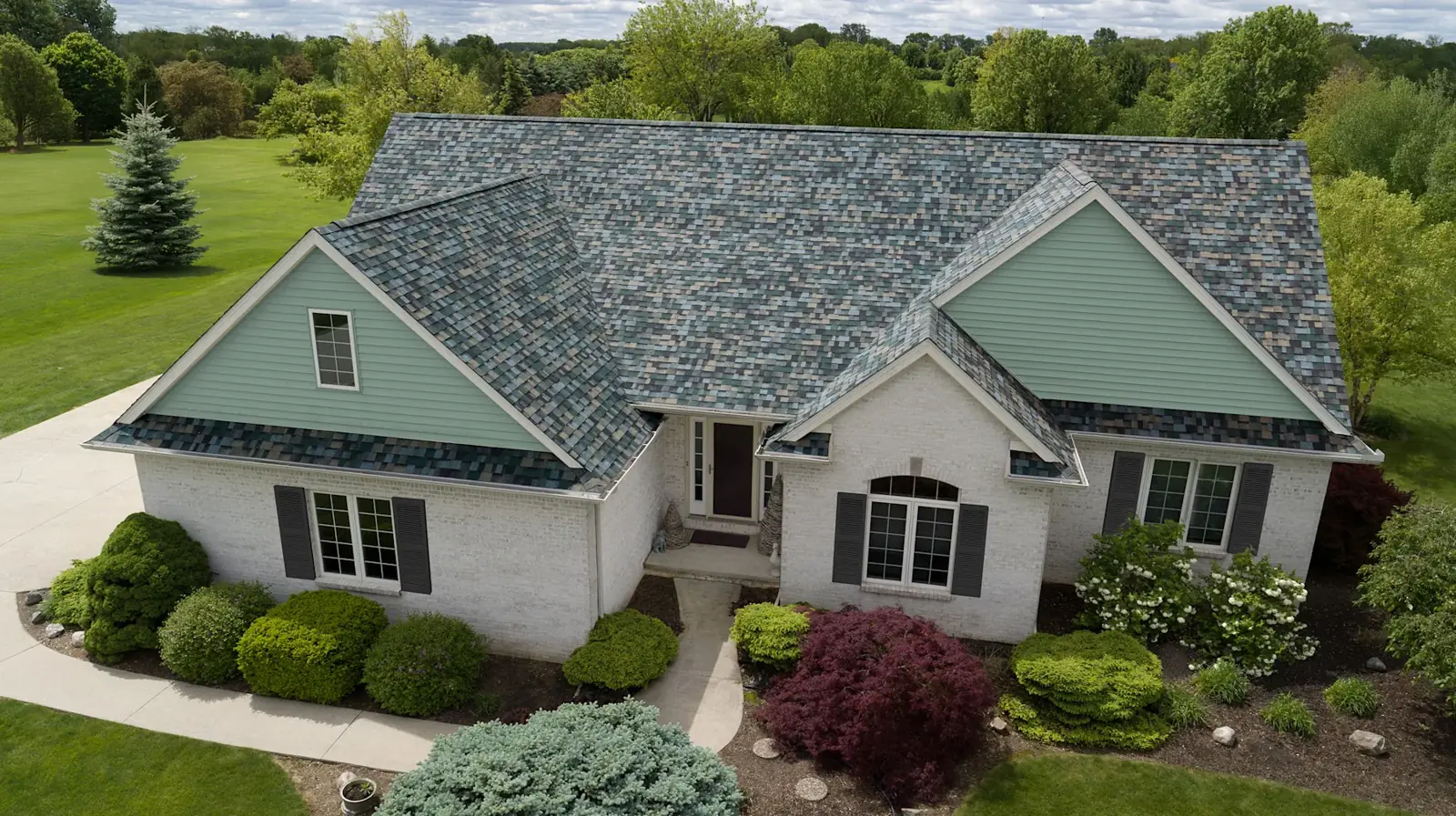
Repair or replace? Start with the condition.
Sometimes you can replace one section of a roof instead of replacing the whole thing. A small shingle repair, replacement of one complete slope, and a full roof replacement are different scopes. The right choice depends on the surrounding shingles, how the roof sections connect, material compatibility, and the condition left behind.
If an Indianapolis roof inspection recommends replacing only part of your roof, ask for a drawing or photos showing exactly where the work stops. Raptor Roofing can explain repair options for your Indianapolis roof and compare them with a larger replacement when needed.
01 / Your roof
Three scopes to compare before you decide
A targeted repair addresses a defined problem, such as damaged shingles or a flashing detail. A partial replacement replaces the materials across a defined section, often a complete slope. A full replacement addresses the roof sections listed in the contract together. Ask the contractor to mark each option on the same roof photos so you can see the difference.
A new section does not make the adjoining roof new. The proposal should tell you what remains, how new and existing work connect, and what conditions may need attention later. Garage roofs, additions, porches, and the main house may have different slopes or materials, so confirm which are included rather than assuming “whole roof” covers every structure.
02 / Your roof
Can you replace only one slope?
A partial replacement may be worth evaluating when a distinct roof section has a different condition from the rest. The roof geometry, material compatibility, transition details, and condition of adjoining sections all matter. Ask where the work would start and stop and how ridges, valleys, walls, and connecting roof sections would be handled.
Compare a partial proposal with a full replacement on paper. Which existing materials remain? What appearance differences should you expect? How will future work connect to the new section? What warranty applies to the completed work? A partial option is useful only when its boundaries and limitations are clear.
03 / Your roof
Start with the source of the problem
A ceiling stain tells you where water became visible inside. It does not necessarily identify the entry point. Water can travel along framing or roof layers before reaching a room. Flashing beside a wall, a pipe penetration, a valley, or damaged shingles may need attention even when the stain appears somewhere else.
Tell the inspector whether the leak follows wind-driven rain, steady rain, melting snow, or weather that appears unrelated. Mention recent gutter work, satellite removal, rooftop equipment work, and earlier repairs. These details help direct the inspection; they do not establish the cause by themselves.
If water is entering now, move belongings only where safe, keep people away from wet electrical fixtures and sagging ceilings, and call for help. Stay off the roof. A temporary cover may reduce further damage, but ask for a separate explanation of the permanent repair.

04 / Your roof
Compare the condition, not just the age
The installation year is helpful context, especially if you have invoices or warranty records. It cannot tell you whether a particular leak is repairable. Different slopes may have different exposure and wear. A younger roof can have an installation problem; an older roof may still have an isolated detail that can be repaired.
| What the inspection finds | What to discuss |
|---|---|
| One damaged flashing or pipe-boot area | Can that detail be rebuilt correctly while the nearby roof remains sound? |
| A small group of damaged shingles | Are compatible shingles available, and can nearby shingles be worked on without causing more damage? |
| Leaks recurring in the same area | Did earlier work reach the source, or was sealant repeatedly added over the symptom? |
| Damage across several roof sections | Would a broader scope correct the roof more reliably than several separate repairs? |
| Soft decking or visible sagging | What concealed or structural conditions need further evaluation before the scope is final? |
GAF’s residential roof repair guidance identifies age, damage extent, repair history, and cost as factors to review. A useful recommendation explains how those factors apply to your roof, with photos of the relevant conditions.
05 / Your roof
What makes a shingle repair practical?
A shingle repair involves more than finding a similar color. Ask how the replacement material fits the existing roof, how the surrounding shingles will be handled, and how the repair connects to the water-shedding layers and flashing. A visible color difference and a functional installation problem are different questions; both deserve an answer before work starts.
The written scope should identify the repair area and any associated flashing, underlayment, or decking work. Ask what happens if opening the area reveals more damage. Agree on how you will receive photographs, how additional work will be priced, and who must approve it.
A small repair cannot renew the rest of an aging roof. Have the contractor distinguish the work being performed from other conditions that are being monitored. That helps you understand both the immediate fix and the next inspection or planning decision.
06 / Your roof
When another repair may become a poor use of your budget
Look at the pattern behind previous invoices. Several repairs to unrelated sections suggest a different planning problem from one unresolved chimney leak. Ask whether the current proposal corrects the cause of the latest problem and whether the rest of the roof has similar defects.
There is no single repair-price percentage that decides every roof. Compare the proposed repair cost, the condition left behind, the likelihood of additional work, and your ownership plans. Avoid treating a promised remaining lifespan as a certainty.
If replacement is recommended, request a complete Indianapolis roof replacement scope. It should explain removal, decking review, flashing, ventilation, materials, cleanup, and the process for concealed damage. For broader budgeting questions, see the Indiana roof replacement cost guide.

07 / Your roof
Ask these questions before approving the work
- Can you show me the source? Ask for photos and an explanation connecting the observed damage to the proposed repair.
- What condition is the surrounding roof in? Understand why the remaining material can support the recommendation.
- What is included? Identify shingles, flashing, underlayment, decking allowances, disposal, and temporary protection where relevant.
- What could change the scope? Set the photo, pricing, and approval process before work opens the roof.
- What remains after the repair? Ask about unresolved conditions, maintenance needs, appearance differences, and follow-up.
- What warranty applies? Request the actual terms for materials and workmanship, including exclusions and the contact for a problem.
08 / Your roof
After a storm, keep the roofing scope clear
Wind and hail concerns deserve inspection and documentation. Ask which conditions were found and which repair or replacement work they support. The roofing recommendation should be understandable even before a payment decision is made.
If insurance is involved, your policy and insurer determine coverage. Raptor can document roof conditions and explain the construction scope. See the Indiana roof insurance guide for questions to discuss with your carrier.
09 / Your roof
Get a recommendation you can understand
You do not need to diagnose your own roof before calling. Tell us what you have noticed and bring any earlier repair records. We will help you understand the condition and the next step. Request a free roof inspection or call (317) 886-0696.
A few helpful answers
Common questions
Can I replace just one slope of my roof?
It may be possible when the proposed boundary, adjoining materials, and flashing details support a reliable installation. Ask to compare the partial scope with a full replacement, including appearance, warranty terms, and the condition of the roof that remains.
Can a roof be too brittle to repair?
Brittle shingles can make a targeted repair more difficult if working on the damaged area breaks adjoining material. Ask the inspector to explain the condition and why the proposed scope can be completed reliably.
Should I replace my roof before selling my home?
Start with the documented condition and any inspection findings. A repair, a replacement, or disclosure of the condition may be relevant to the sale. Discuss the roof scope with the contractor and the transaction requirements with your real estate professional.
What should a roof repair estimate include?
It should identify the area and work included, relevant materials and flashing, any decking assumptions, cleanup, warranty terms, and how hidden damage or additional work will be documented, priced, and approved.
Let’s look at your roof
A clear next step starts here.
Tell us what you’ve noticed and what you’re planning. Raptor Roofing can review the roof’s condition and discuss options for your property.
Serving Indianapolis and nearby Central Indiana communities.
Any project price, schedule, or warranty coverage should be confirmed in your written proposal and the applicable warranty documents.