
Capacity
5-inch and 6-inch sizing conversations
Bigger roof planes, steep pitches, long runs, and heavy valleys may need more capacity than a basic gutter layout provides.
Drainage and water management
Gutters protect far more than the roof edge. Raptor Roofing plans seamless gutter replacement around roof water volume, downspout routing, fascia condition, siding protection, landscaping, basement risk, and foundation drainage.
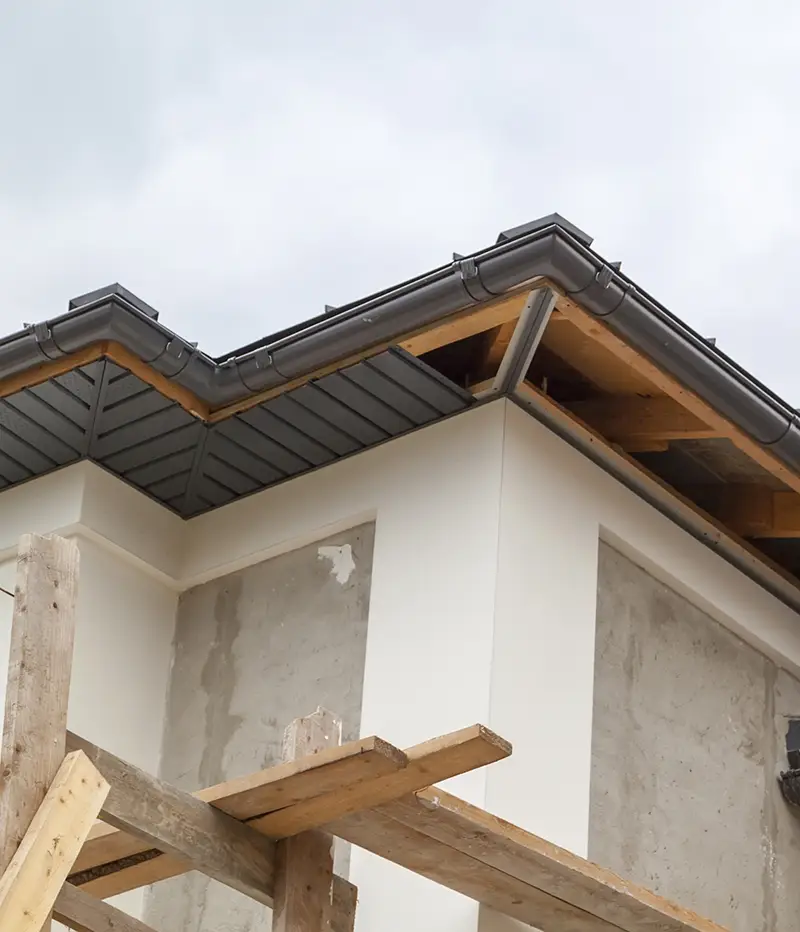
Drainage that works
Gutter replacement should account for roof size, valley water, 5-inch versus 6-inch capacity, downspout routing, fascia condition, guard options, landscaping, basement risk, and where the water finally lands.
Capacity
Bigger roof planes, steep pitches, long runs, and heavy valleys may need more capacity than a basic gutter layout provides.
Routing
A good replacement plan considers sidewalks, low spots, landscaping, doors, driveways, basement walls, and existing drainage paths.
Protection
Trees, pine needles, roof valleys, and repeated clogging should trigger a conversation about guard options and maintenance expectations.
Coordination
Gutter replacement can expose fascia problems and should be coordinated with roofing or siding if those systems are also changing.
Why gutters fail
Gutters fail when water volume, pitch, fasteners, seams, debris, or downspout locations stop working together. The visible spillover may be at the roof edge, but the damage can show up at fascia, soffit, siding, mulch beds, sidewalks, basements, and foundations.
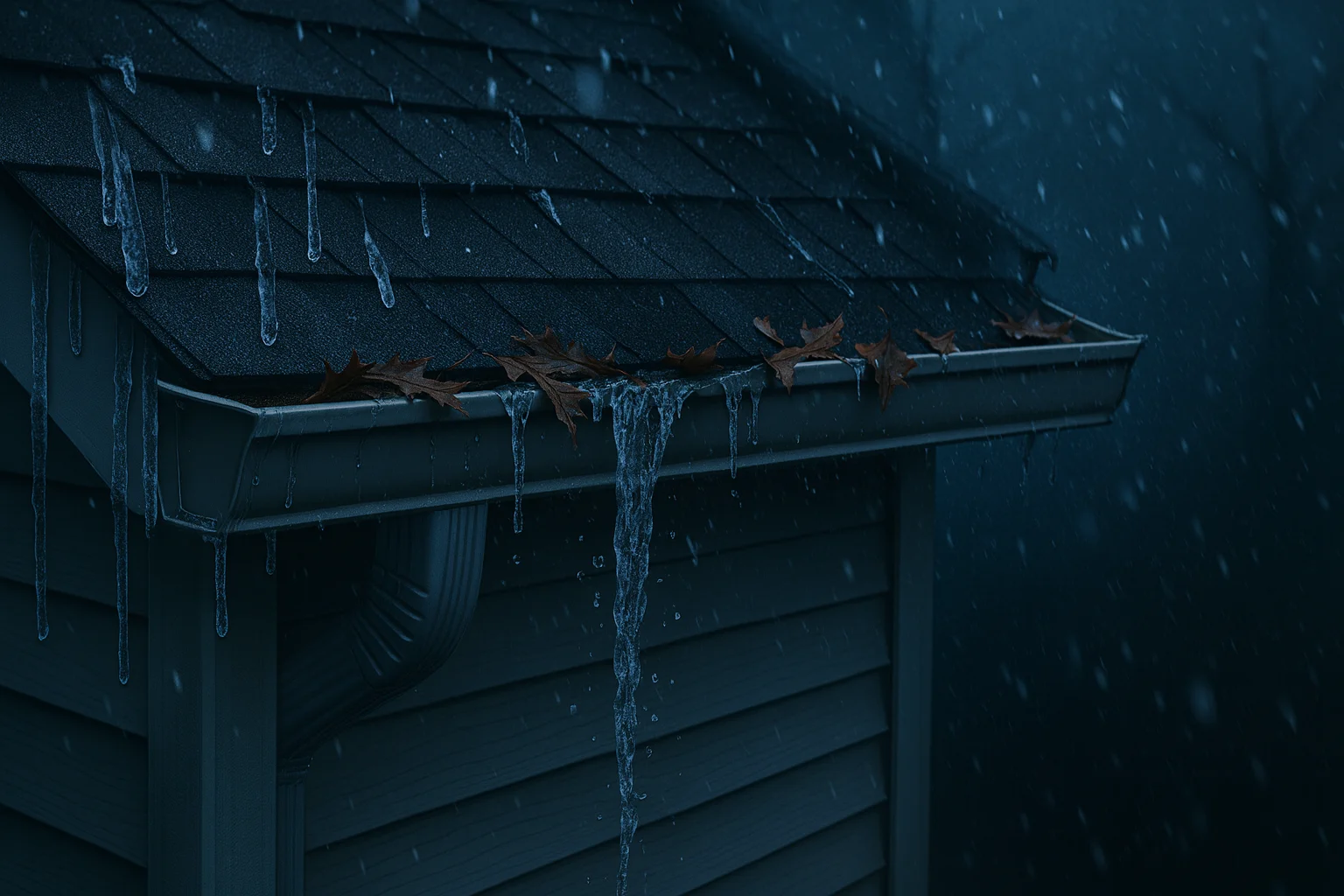
System choices
The right system is based on roof shape, rainfall volume, debris exposure, fascia condition, and where water needs to go.
| Decision | Options to discuss | Why it matters |
|---|---|---|
| Gutter size | Standard 5-inch, larger 6-inch, half-round, or specialty profiles where appropriate. | Capacity affects overflow during heavy rain, especially on steep roofs, long runs, and valley-heavy designs. |
| Material and color | Aluminum, steel, copper, color-matched finishes, and trim-aware selections. | The gutter should protect the home and look intentional with roofing, siding, fascia, and trim. |
| Downspout layout | More downspouts, larger downspouts, extensions, splash blocks, or drainage tie-ins. | Water that lands too close to the home can cause erosion, basement moisture, and foundation pressure. |
| Gutter guards | Guard options, debris screens, or maintenance plans when trees and repeated clogs are the issue. | Guard selection should match the debris type and roof shape instead of being treated as a universal add-on. |
Replacement signals
A small repair can make sense, but repeated failures often mean the system is undersized, poorly routed, worn out, or no longer attached securely.
Water
Structure
Damage
Roofline-first drainage
Gutter replacement should not be measured only in linear feet. Roof pitch, roof area, valleys, dormers, gutter run length, inside corners, tree cover, and downspout placement all affect performance. That is why two homes with the same gutter length can need very different drainage plans.
The best project also protects the parts around the gutters. Fascia, soffit, drip edge, siding, trim, and landscaping all benefit when water is routed correctly. If the roof or siding will be replaced soon, gutters should be planned in the right sequence so the final exterior is cleaner.
Raptor Roofing frames gutters as water management, not just metal on the eaves. The goal is simple: collect roof water, move it reliably, and discharge it where it will not create the next repair.
Drainage depth
A strong gutter plan should be specific about water control, sizing, routing, debris, guard fit, discharge options, and the parts of the home the system is meant to protect.
A strong gutter inspection should trace the full path of water. The starting point is the roof: valleys, steep planes, long runs, dormers, and inside corners can all overload a weak gutter layout. The endpoint is just as important because downspouts that dump water too close to the home can create foundation and basement problems.
The proposal should explain whether the home needs standard or larger gutters, whether downspouts should be added or moved, whether splash blocks or extensions are enough, and whether an underground drainage conversation is warranted. It should also flag fascia, soffit, drip edge, or siding issues before new gutters hide them.
Raptor Roofing serves homeowners and property owners across Central Indiana, including Indianapolis, Carmel, Fishers, Noblesville, Greenwood, Zionsville, Bloomington, Lafayette, and Columbus. Gutter planning should stay local because Indiana storms can expose undersized runs quickly, especially on shaded homes with heavy tree debris.
Sizing
Color matters, but capacity and routing decide performance. Homeowners should know why 5-inch versus 6-inch systems may be part of the recommendation.
Debris
A guard that works for broad leaves may not behave the same with pine needles, roof grit, or heavy valley wash. Selection should be specific.
Foundation
A gutter system is incomplete until the water lands safely away from basement walls, low spots, walks, and landscaping.
Process
Homeowners and property owners should know what is being checked, what the recommendation means, and how the work will move forward.
We inspect the roofline, valleys, current pitch, downspouts, overflow points, fascia condition, landscaping, and where water lands.
You get recommendations for seamless runs, gutter size, downspouts, guard options, color, and related roofline repairs.
The crew installs the system with attention to pitch, fastening, corners, downspout routing, and clean exterior lines.
We walk through the finished drainage plan so you know how the system should perform and what to monitor after heavy rain.
Gutter Replacement FAQs
Clear answers help homeowners and property owners understand the next step before they book an inspection.
Not always, but 6-inch gutters can be helpful on larger roof areas, steep pitches, long runs, and heavy water valleys. The right size should be based on roof water volume and layout.
Often, yes. If the roof is being replaced, it is a good time to evaluate gutters, drip edge, fascia, and downspouts so the whole roofline works together.
No guard can make every home maintenance-free. The right guard can reduce clogging, but the recommendation should match tree cover, debris type, roof valleys, and budget.
Heavy rain is when the system is tested. Overflow can point to clogging, undersized gutters, poor pitch, too few downspouts, or a roof valley dumping too much water into one area.
Yes. Downspout placement is a major part of drainage planning and may be changed to move water away from doors, walks, low spots, landscaping, and the foundation.
Raptor Roofing serves homeowners across Central Indiana, including Indianapolis, Carmel, Fishers, Noblesville, Greenwood, Zionsville, Bloomington, Lafayette, and Columbus.
They can be part of the solution. Gutters and downspouts should move roof water away from the foundation, but grading, drains, soil, and waterproofing may also affect basement moisture.
Yes. New gutters need a solid mounting surface. If fascia or soffit areas are soft, rotted, or water-damaged, those issues should be addressed before the replacement system is installed.
Start with clarity
Request a free gutter inspection. Raptor Roofing will review the roofline, explain the drainage issues, and build a replacement plan that protects more than the edge of the roof.