Know the condition.
Understand the roof before choosing the work.
See your options.
Compare repairs, materials, and the complete scope.
Move forward clearly.
Know what happens next, from scheduling to cleanup.
Your roof, considered carefully
A complete system for your low-slope roof.
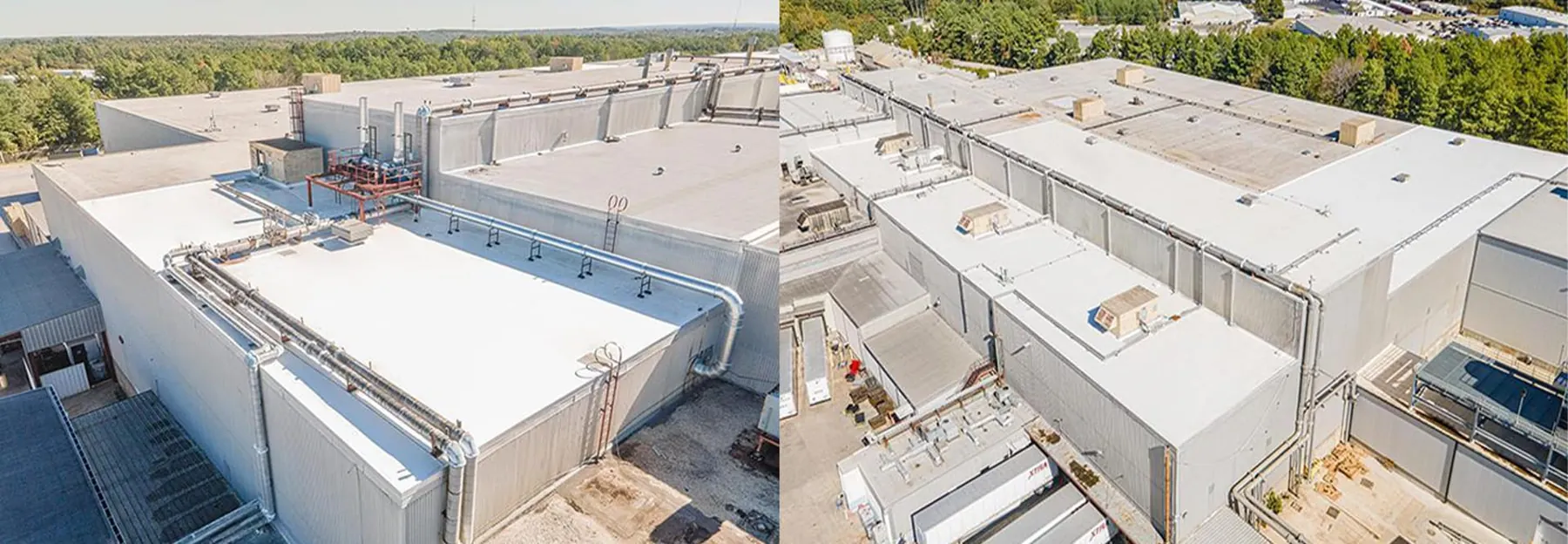
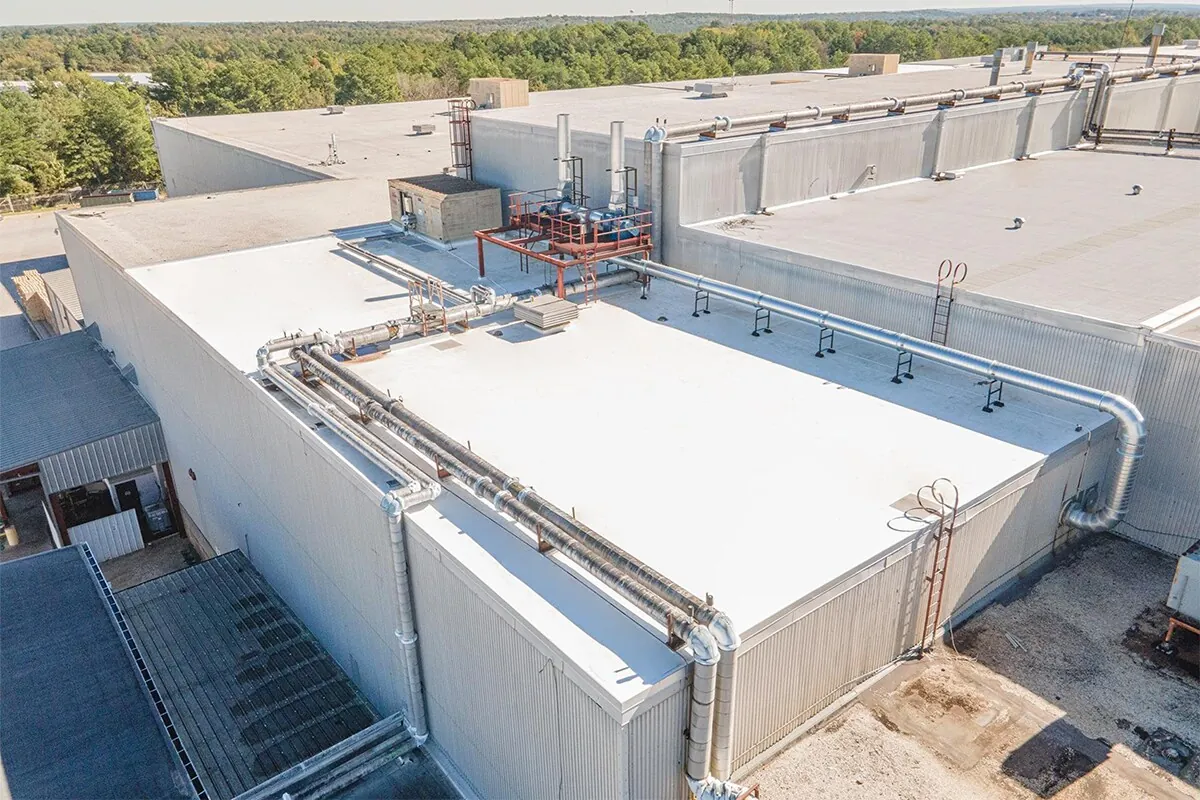
Restaurants, retail centers, warehouses, offices, medical buildings, churches, and light industrial properties around Indianapolis often need a low-slope roof system that can be installed efficiently and maintained with clear documentation.
TPO membranes are commonly selected for their reflective surface and welded seams, but the real performance comes from the roof assembly. Insulation thickness, attachment method, cover board, flashing, curbs, drains, scuppers, and edge metal all affect the outcome.
Indiana weather adds extra urgency to the details. Heavy rain exposes poor drainage, freeze-thaw cycles stress seams and flashing, hail can bruise surfaces, and rooftop traffic can puncture membranes around service paths.
The assessment
What our team evaluates for your TPO roof.
Attachment method
Mechanically attached, adhered, or induction-welded assemblies
Changes uplift resistance, labor, insulation fastening, and roof feel.
Insulation package
Tapered insulation, flat stock, cover board, and R-value planning
Affects drainage, energy performance, and puncture resistance.
Flashings
Curbs, parapets, drains, scuppers, pipes, and edge metal
Most leaks happen at details, not in the open field.
Repair versus replacement
Localized repair, restoration, recover, or full tear-off
The right path depends on saturation, age, warranty goals, and risk.
A complete plan, carefully carried out.
Our team evaluates the roof, recommends the assembly, and handles the details: from insulation and drainage to staging and the final inspection.


Repair, restore, or replace
The right next step starts with the roof you have.
A material name alone cannot tell you whether a roof needs replacing. We connect visible damage, moisture, and the history of the roof before recommending the work.
When a targeted approach may fit
A small puncture, localized seam opening, or flashing issue may be repairable if compatible material can be installed on a sound, dry assembly.
When a larger plan may fit
Extensive deterioration, widespread seam problems, repeated leaks, or wet insulation can make replacement more dependable than ongoing patches.
We also check: Punctures or cuts from rooftop traffic; Open seams or stressed welds; Surface wear or hail marks; Ponding water after rain; Clogged drains or scuppers; Soft insulation around low areas.
Compare the full scope
What belongs in your roofing estimate.
A clear proposal helps you see what is included, what may change after tear-off, and how the finished roof will be protected.
01
TPO manufacturer, membrane thickness, and attachment
02
Existing roof removal, moisture findings, and insulation
03
Welded seams, rooftop curbs, drains, and perimeter metal
04
Staging, walkway protection, closeout, and warranty requirements
The Raptor process
Clear from the first look to the final review.
01
Map
We document roof areas, rooftop units, drains, seams, penetrations, interior leak reports, and access constraints.
02
Test
Suspect seams, flashing, wet insulation indicators, and drainage areas are reviewed before scope decisions.
03
Plan
You receive a repair, maintenance, restoration, or replacement recommendation tied to risk and budget.
04
Execute
Work is staged around weather, safety, building access, tenants, and business continuity.
Helpful answers
Good questions. Straight answers.
What should a TPO roof replacement estimate include?
Look for the membrane and attachment system, tear-off or recover scope, moisture assessment, insulation and cover board, drainage details, flashing, edge metal, rooftop access, cleanup, and warranty requirements. Those details make competing estimates easier to compare.
Is TPO good for Indiana commercial roofs?
TPO can be a strong fit for many flat and low-slope Indiana buildings when drainage, insulation, seams, and flashing are handled correctly.
Can TPO roofs be repaired?
Yes. Punctures, seam issues, flashing problems, and some localized failures can often be repaired if the roof is otherwise sound.
What causes TPO roof leaks?
Common causes include open seams, punctures, flashing failures, ponding water, loose edge metal, and rooftop equipment details.
How often should TPO roofs be inspected?
At least annually and after major storms. Commercial roofs with rooftop traffic or leak history may need more frequent checks.
Can TPO be installed over an old roof?
Sometimes, but wet insulation, trapped moisture, code requirements, weight, and warranty goals must be reviewed first.
Does Raptor work on active commercial buildings?
Yes. Scheduling, access, staging, safety, and tenant communication can be built into the commercial roofing plan.
Keep exploring
Compare the options for your property.
A simpler way forward
Let’s make the next step clear.
Tell us about the property and what brought you here. We’ll follow up to discuss your roof and arrange a free inspection.
Serving Indianapolis, Greenwood, Carmel, Fishers, Noblesville, and nearby Central Indiana communities.
Prefer to talk? Call (317) 886-0696.