
If you are replacing a roof in Jackson County, the big material question usually comes down to asphalt shingles versus metal roofing. Asphalt is familiar, flexible, and cost-conscious. Metal can be a premium long-term upgrade. Both can be smart. Both can be wrong if the roof system, home style, drainage, and budget do not fit the material.
That choice looks different in Jackson County than it does in a dense Indianapolis neighborhood or a newer Hamilton County subdivision. A Seymour home near the I-65 and US 50 corridor may see wind-driven rain and fast-moving storms. A Brownstown or Crothersville home may have older flashing, mature trees, or past repairs. Rural homes near Medora, Vallonia, Freetown, and county roads can have open wind exposure, long roof planes, barns or outbuildings, and gutters that collect a lot of leaf debris.
If you are comparing asphalt and metal roofing in Jackson County, call (317) 886-0696 or schedule a free roof inspection with Raptor Roofing. We will inspect the roof first, then explain whether architectural shingles, impact-resistant shingles, standing seam metal, stone-coated steel, or a repair-first plan makes the most sense for your home.
Quick Answer: Asphalt or Metal for Jackson County?
For most Jackson County homes, architectural asphalt shingles are the best starting point. They balance cost, curb appeal, repairability, color choice, and a familiar residential look. Metal roofing is worth comparing when you plan to stay in the home, want a premium roof system, have open wind exposure, like the look, or want to reduce the chance of doing another full roof replacement later.
- Choose architectural asphalt shingles if you want the strongest balance of price, appearance, repair flexibility, and neighborhood fit.
- Compare impact-resistant shingles if hail, wind, insurance questions, or long-term ownership are part of the decision.
- Consider standing seam metal if the home has clean roof planes, a modern or premium exterior, and a budget that supports a more detailed installation.
- Consider stone-coated steel if you like the durability case for metal but want a textured shingle or shake-style appearance.
- Do not choose by material alone. Decking, ventilation, flashing, gutters, roof pitch, valleys, and workmanship decide how well either option performs.
Why the Material Decision Matters in Jackson County
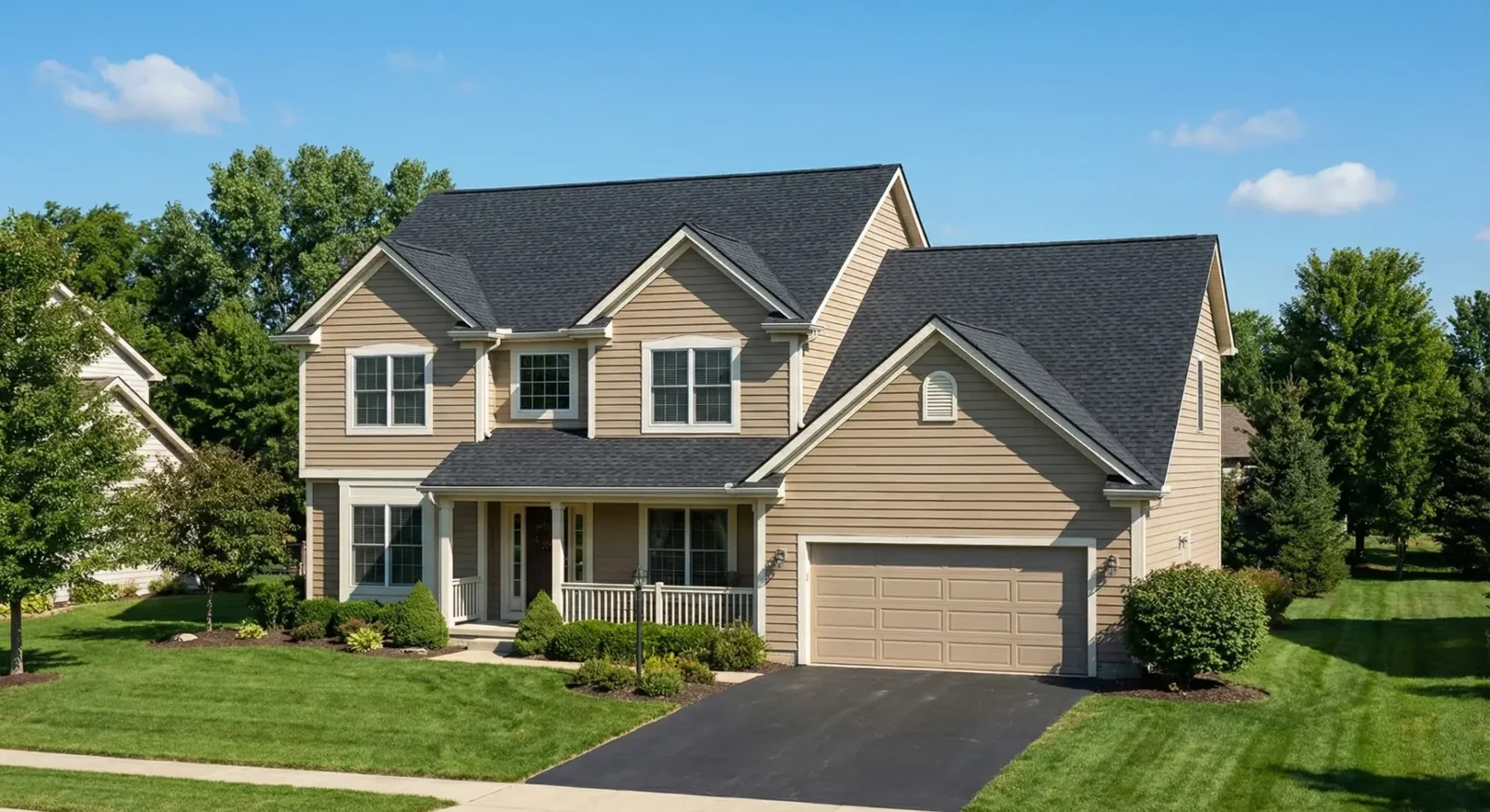
Jackson County homes deal with a mix of roof conditions. Some houses have simple ranch rooflines where asphalt shingles make the decision fairly straightforward. Others have steep gables, dormers, chimneys, older additions, wooded lots, and long valleys that make water management more important than the name of the material.
Storm exposure changes the conversation too. Heavy rain, wind, hail, summer heat, winter freeze-thaw cycles, and falling limbs can all shorten roof life. On an open rural lot, wind uplift may matter more. On a wooded lot, leaves, shade, algae, and gutter overflow may matter more. On an older in-town home, the weak point may be chimney flashing, porch tie-ins, or attic ventilation.
That is why a material decision should start with the existing roof. If the decking is soft, the attic is under-ventilated, or the flashing is failing, upgrading the visible roof material will not solve the whole problem. A better roof plan compares material options only after the roof system has been inspected.
Asphalt Shingles: Best Fit for Many Jackson County Homes
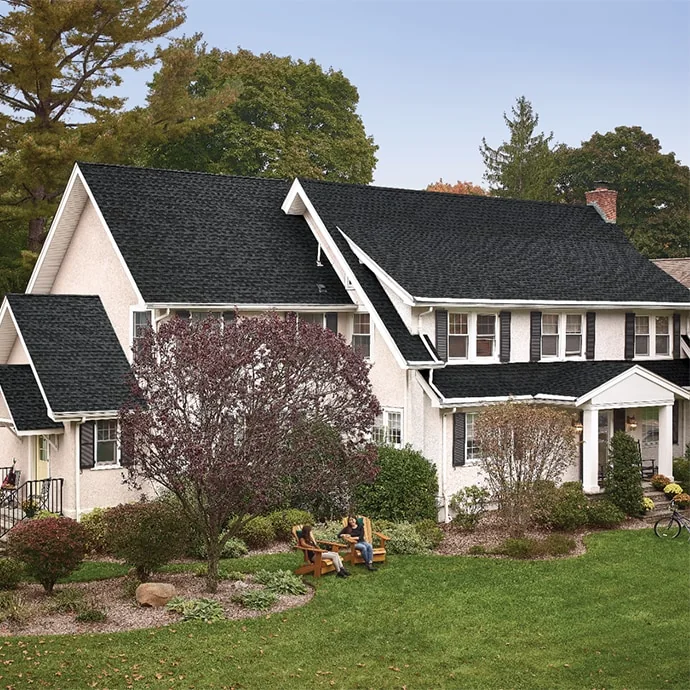
Architectural asphalt shingles are the most practical option for many Jackson County homeowners because they fit a wide range of home styles and budgets. They look natural on brick ranches, two-story homes, older houses, and newer subdivision homes. They also give homeowners plenty of color choices without making the roof feel out of place.
Asphalt shingles are also easier to service in many situations. If a pipe boot fails, a small area is damaged by wind, or a future repair is needed around a vent or flashing detail, the repair path is usually more straightforward than with some specialty roof systems. That matters for homeowners who want a strong roof without turning every future service call into a premium-material project.
When Asphalt Is the Smarter Choice
You want the best balance of cost and performance. Asphalt usually makes the most sense when the roof needs a full replacement but the homeowner wants to keep the project practical.
The home style is traditional. Many homes in Seymour, Brownstown, Crothersville, Medora, Vallonia, and rural Jackson County look best with a dimensional shingle rather than a bold metal profile.
You may sell within the next several years. A well-installed asphalt roof can make the home easier to sell without asking the homeowner to invest in a premium roof they may not personally enjoy long enough to justify.
You want color flexibility. Asphalt shingles come in blends that pair well with red brick, tan siding, white trim, black windows, gray siding, stone accents, and older home exteriors.
You have a complex roof with many penetrations. Valleys, chimneys, skylights, vent pipes, and wall intersections can be handled with either material, but asphalt may keep the scope simpler when the roof has a lot of interruptions.
Metal Roofing: Worth Comparing for the Right Home
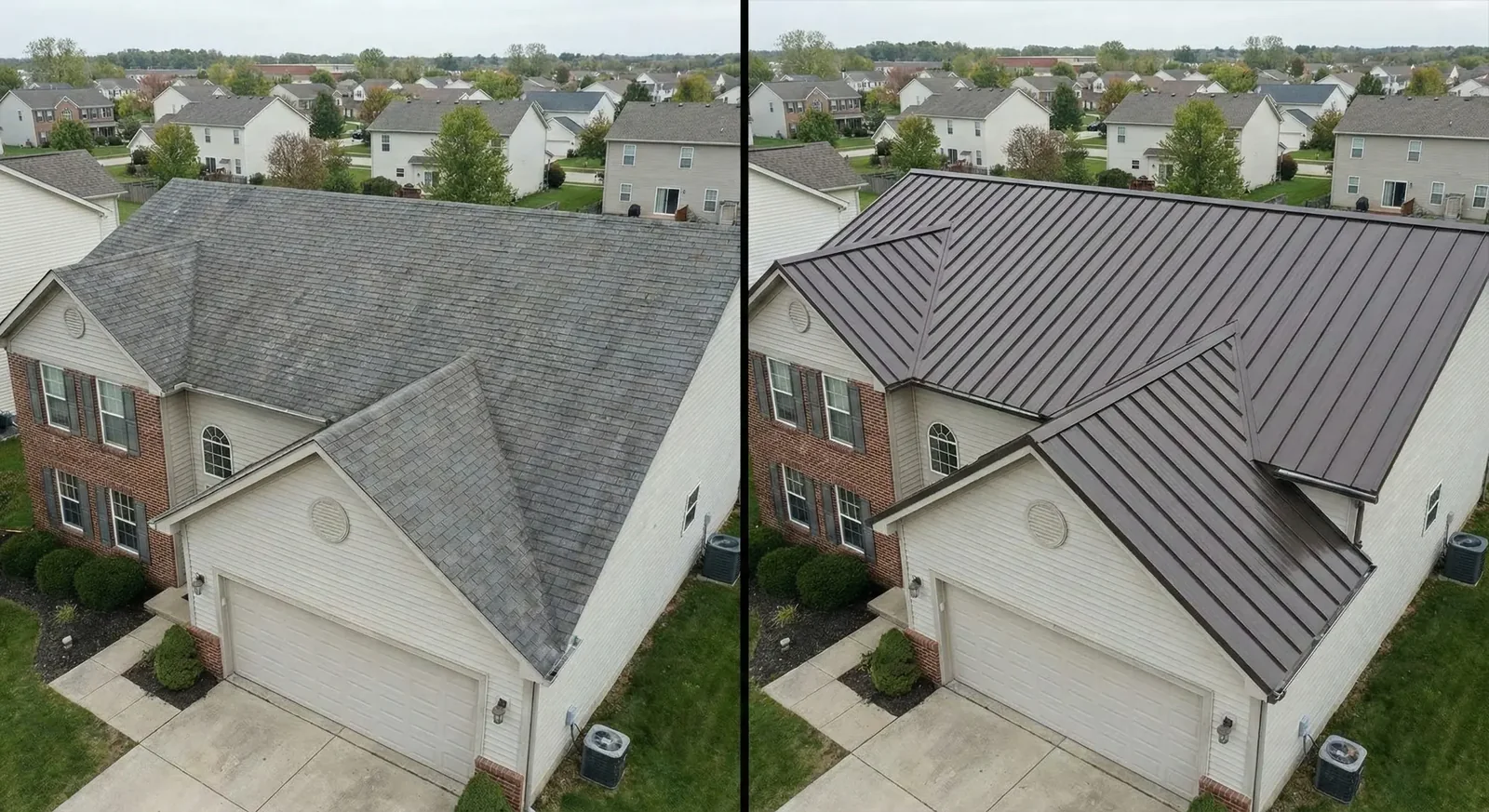
Metal roofing is not just one product. Standing seam, exposed-fastener panels, metal shingles, and stone-coated steel all behave differently and look different on a house. For residential roof replacement, the most common premium conversations are standing seam metal and stone-coated steel.
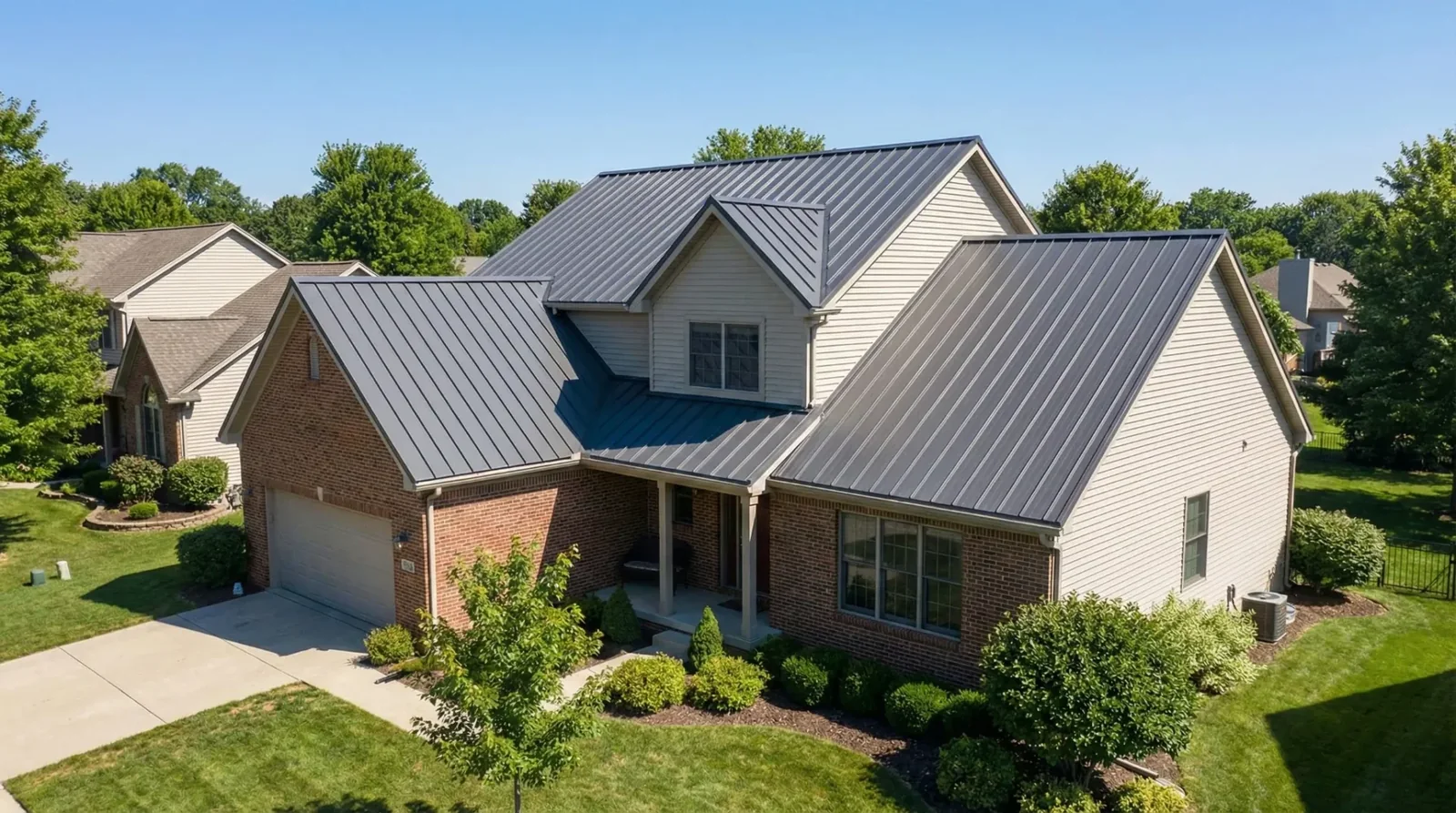
Standing seam has clean vertical lines and concealed fasteners on the main roof field. It can look excellent on modern farmhouses, premium homes, porch accents, dormers, and simple roof planes where the panel layout feels intentional. Stone-coated steel offers a more textured look that can feel closer to shingles or shake while still using a metal-backed roof system.
When Metal Roofing Makes More Sense
You plan to stay in the home. Metal makes the most sense when the homeowner expects to benefit from the roof for a long time.
The roof has clean, visible planes. Standing seam looks best when the panel layout can run cleanly and the trim details are not fighting the roof shape.
The home has open wind or weather exposure. Rural lots and exposed roof planes are good reasons to compare stronger systems, especially when the current roof has storm history.
You want a premium exterior update. If roofing, gutters, siding, windows, and trim are part of a larger curb-appeal plan, metal may support the finished look better than a basic shingle.
You like the maintenance profile. Metal still needs inspections and careful detailing, but some homeowners prefer the long-term maintenance expectations of a well-installed metal system.
Asphalt vs. Metal Roofing for Jackson County Homes
| Decision point | Architectural asphalt shingles | Standing seam or metal roofing | What Raptor looks at |
|---|---|---|---|
| Upfront budget | Usually the more practical starting point | Usually higher because material and detail work are more involved | Whether the budget should go toward premium material, decking, ventilation, gutters, or flashing first |
| Home style | Fits most Jackson County brick, siding, ranch, and two-story homes | Best on homes where the metal profile looks intentional | Roof visibility, trim color, siding, brick, neighborhood style, and HOA rules |
| Storm concerns | Impact-resistant shingle options may be worth comparing | Metal may be attractive for long-term storm resilience goals | Recent hail or wind evidence, roof age, soft metals, gutters, and documentation needs |
| Repair flexibility | Often simpler to match and service later | Repairs can be more specialized depending on system and panel layout | Penetrations, valleys, future service access, and product availability |
| Tree cover | Works well when drainage, ventilation, and maintenance are handled | Can shed water well but still needs gutter and debris planning | Shade, leaf buildup, algae risk, valleys, gutter size, and downspout routing |
| Long-term ownership | Strong value when installed as a complete system | Worth serious comparison for homeowners staying long term | How long you plan to own the home and what you expect from the roof |
Standing Seam vs. Stone-Coated Steel
If you like the idea of metal, the next decision is appearance. Standing seam creates a clean vertical panel look. It can feel sharp, simple, and modern. Stone-coated steel is usually a better conversation when a homeowner wants metal-backed durability but prefers a roof that still reads as shingles, shake, or textured residential roofing from the street.
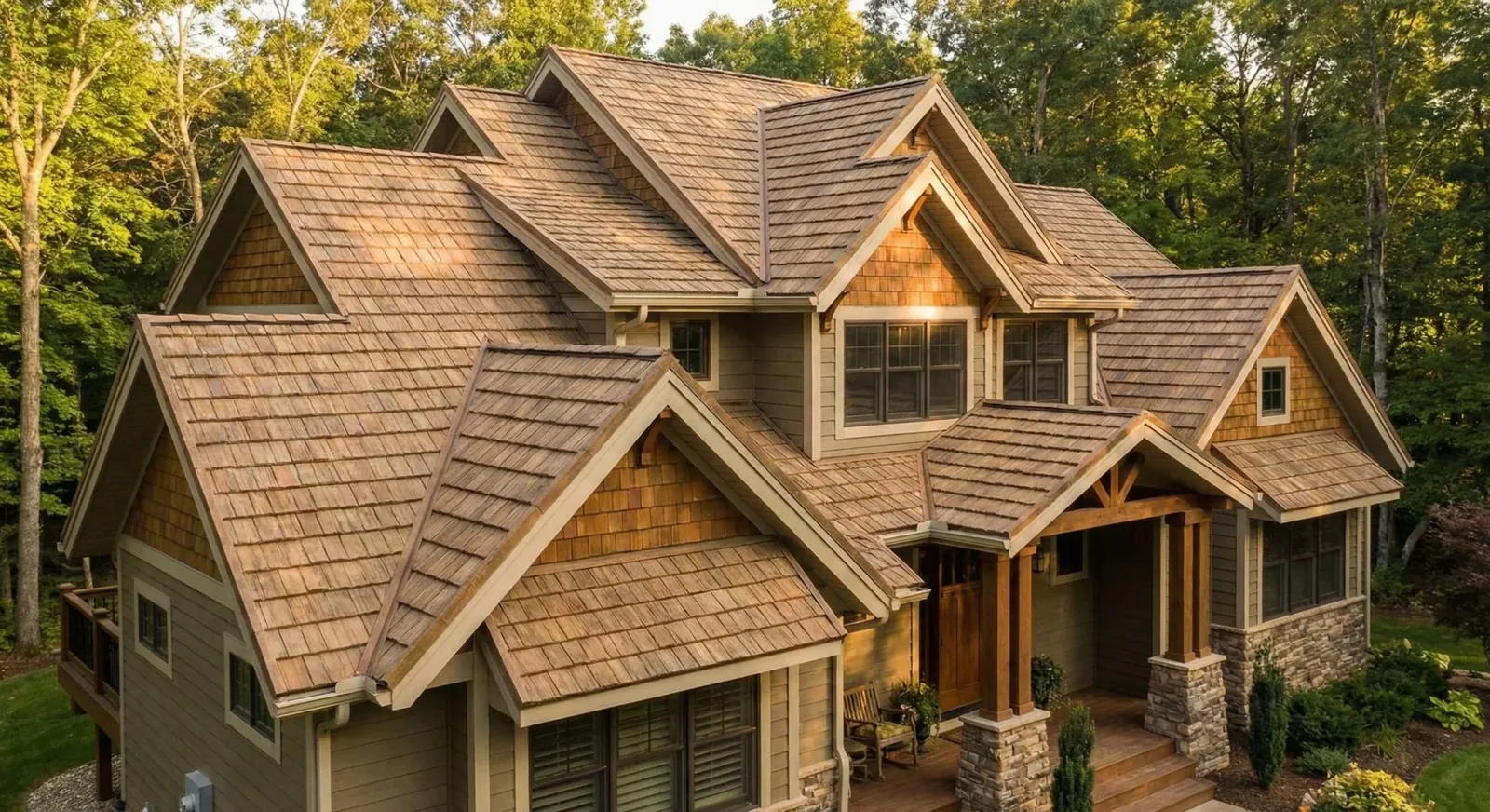
For homes around wooded roads, older neighborhoods, and rural settings, stone-coated steel can sometimes feel more natural than standing seam across the whole roof. For homes with a cleaner modern exterior, black windows, white siding, simple roof planes, or a strong farmhouse look, standing seam may be the better visual match.
The right answer comes down to roof pitch, decking, trim, valleys, penetrations, gutter transitions, snow movement, color, and how the roof looks against the rest of the exterior.
Local Scenarios: Which Roof Fits?
A Seymour subdivision home with a 15-year-old roof: Architectural asphalt shingles are probably the first comparison. Ask whether impact-resistant shingles make sense if the roof has storm history or open wind exposure.
A Brownstown home with mature trees and old flashing: Do not choose the material first. Inspect chimneys, valleys, gutters, decking, and attic ventilation. Asphalt may still be the right choice, but water management should drive the scope.
A rural Jackson County home on an open lot: Compare asphalt, impact-resistant shingles, and metal. Wind exposure, long roof planes, and gutter discharge may change the recommendation.
A premium home with a large visible roofline: Standing seam or stone-coated steel may be worth pricing beside architectural asphalt. The roof is a major part of the home’s exterior, so curb appeal and long-term ownership matter more.
A home with porch roofs, dormers, or accent areas: A mixed approach can make sense. Some homeowners choose asphalt for the main roof and metal accents over porches, bays, or dormers.
Do Not Skip Ventilation, Flashing, and Gutters
A roof replacement is not only the visible material. Underlayment, ice and water protection, starter, ridge cap, pipe boots, valley treatment, chimney flashing, wall flashing, attic intake, exhaust ventilation, drip edge, gutters, and downspouts all affect performance.
This is especially important in Jackson County because homes can sit in very different conditions. A shaded property may need more attention to drying and debris. An open property may need more attention to wind and uplift. An older home may need more attention to decking, chimneys, and ventilation. A newer home may need a closer look at builder-grade roof details and attic airflow.
Questions to Ask Before Choosing Asphalt or Metal
- Is the roof pitch appropriate for every material being recommended?
- Does the roof need decking repair before any new material is installed?
- Will the proposal include new flashing, pipe boots, underlayment, starter, ridge cap, and drip edge?
- Does the attic have enough intake and exhaust ventilation?
- How will valleys, chimneys, skylights, dormers, and wall intersections be handled?
- Are gutters and downspouts sized and routed well enough for the roof?
- Would impact-resistant shingles solve the real concern without the cost of metal?
- Does standing seam or stone-coated steel fit the home’s exterior style?
- How long do you plan to stay in the home?
- Are there neighborhood or HOA rules about roof color or material?
Raptor Takeaway
Asphalt shingles are the practical answer for many Jackson County homes. Metal roofing is the premium answer for the right home, the right budget, and the right ownership timeline.
The best choice is not made from a brochure. It is made after the roof, attic, gutters, flashing, drainage, and exterior style are inspected together. A strong asphalt roof can outperform a poorly planned metal roof. A well-planned metal roof can be an excellent long-term investment. The inspection should tell you which path fits your home.
Schedule a Jackson County Roof Material Inspection
Raptor Roofing helps Jackson County homeowners compare architectural shingles, impact-resistant shingles, standing seam metal, stone-coated steel, and full roof replacement options. If asphalt is the smarter choice, we will explain why. If metal is worth the investment, we will explain what details have to be right.
Schedule Your Jackson County Roof InspectionCall (317) 886-0696
Frequently Asked Questions About Asphalt vs. Metal Roofing in Jackson County
Is asphalt or metal roofing better for Jackson County, Indiana homes?
Architectural asphalt shingles are the best starting point for many Jackson County homes because they balance cost, curb appeal, repairability, and familiar neighborhood appearance. Metal roofing can be better for long-term homeowners who want a premium system, stronger water shedding, and a different maintenance profile.
Is metal roofing worth the extra cost in Seymour or Brownstown?
It can be worth it when the home has clean roof planes, open wind exposure, a long ownership timeline, or a premium exterior plan. It may not be the best use of budget if the home needs lower upfront cost, simple repairs, or unresolved decking and ventilation work first.
What is the best roof for wooded Jackson County lots?
The best roof depends on shade, leaf debris, pitch, gutters, valleys, attic ventilation, and maintenance habits. Asphalt shingles can work well when drainage and ventilation are right, while metal or stone-coated steel may be worth comparing for long-term owners with heavy tree cover.
Can metal roofing go over old asphalt shingles?
Some systems can be installed over an existing roof in certain situations, but a tear-off is often the better conversation when decking, flashing, ventilation, leaks, or storm damage need to be inspected and corrected.
Should I choose standing seam or stone-coated steel?
Standing seam gives a cleaner vertical metal look, while stone-coated steel keeps a more textured shingle or shake-style appearance. The right choice depends on home style, budget, roof pitch, HOA rules, trim details, and long-term plans.
Can Raptor Roofing compare asphalt and metal options in Jackson County?
Yes. Raptor Roofing can inspect the roof, review ventilation, drainage, decking, flashing, storm exposure, and curb appeal goals, then explain which material options make sense for the home.
If metal is the finalist, compare the right details
Move from a broad asphalt-versus-metal choice to the exact system, proposal scope, and ownership responsibilities.