
A ceiling leak in a Noblesville home is one of those problems that feels small until it is not. One brown ring, one steady drip, or one soft spot in the drywall can point to a roof leak, damaged flashing, clogged gutters, an attic ventilation problem, plumbing, HVAC condensation, or storm damage that finally found its way inside.
The first few minutes matter. Noblesville homes near Morse Reservoir, Stony Creek, downtown, Hazel Dell Parkway, Promise Road, Hague Road, White River, or the Westfield and Fishers edges can all see different leak patterns depending on roof pitch, tree cover, wind direction, ice, gutters, valleys, and how the attic is ventilated. A drip in the ceiling does not automatically mean the whole roof is failing, but it does mean water has already entered a place it should not be.
If you found a ceiling leak in Noblesville, call (317) 886-0696 or schedule a free inspection with Raptor Roofing. We can help determine whether the issue is roof-related, whether temporary protection is needed, and what should happen before the next heavy rain.
Quick Answer: What Should You Do First When Your Ceiling Is Leaking?
Protect the room, avoid electrical hazards, document the leak, and schedule an inspection quickly. Do not assume the leak is fixed just because the rain stops. A roof leak can pause between storms while the hidden water path remains open.
- Move furniture, rugs, electronics, and valuables away from the drip.
- Place a bucket, towels, or plastic sheeting under the leak to limit interior damage.
- Avoid lights, ceiling fans, switches, and outlets near the water. If water is near electricity, stay clear and get help.
- Take photos and video of the ceiling, floor, walls, and active drip before cleanup.
- Note the weather and timing: Was it heavy rain, wind-driven rain, snow melt, or a storm after hail?
- Do not walk the roof yourself, especially if it is wet, steep, icy, or storm damaged.
- Schedule a roof leak inspection before the next round of rain if possible.
The goal is to slow interior damage, stay safe, and identify the water source before it spreads.

Step 1: Protect the Room Without Making the Ceiling Worse
Start inside the room where the leak is showing. Move anything valuable away from the drip. Put a bucket under active water and use towels around the splash area. If the leak is near a couch, bed, rug, hardwood floor, piano, office setup, or electronics, move those items first.
If the ceiling is soft, sagging, cracking, or bulging, keep people out from under it. Waterlogged drywall can release suddenly. Do not stand under a bulging ceiling trying to inspect it from below. If there is a large sag or active water near electrical fixtures, treat it as urgent and get help.
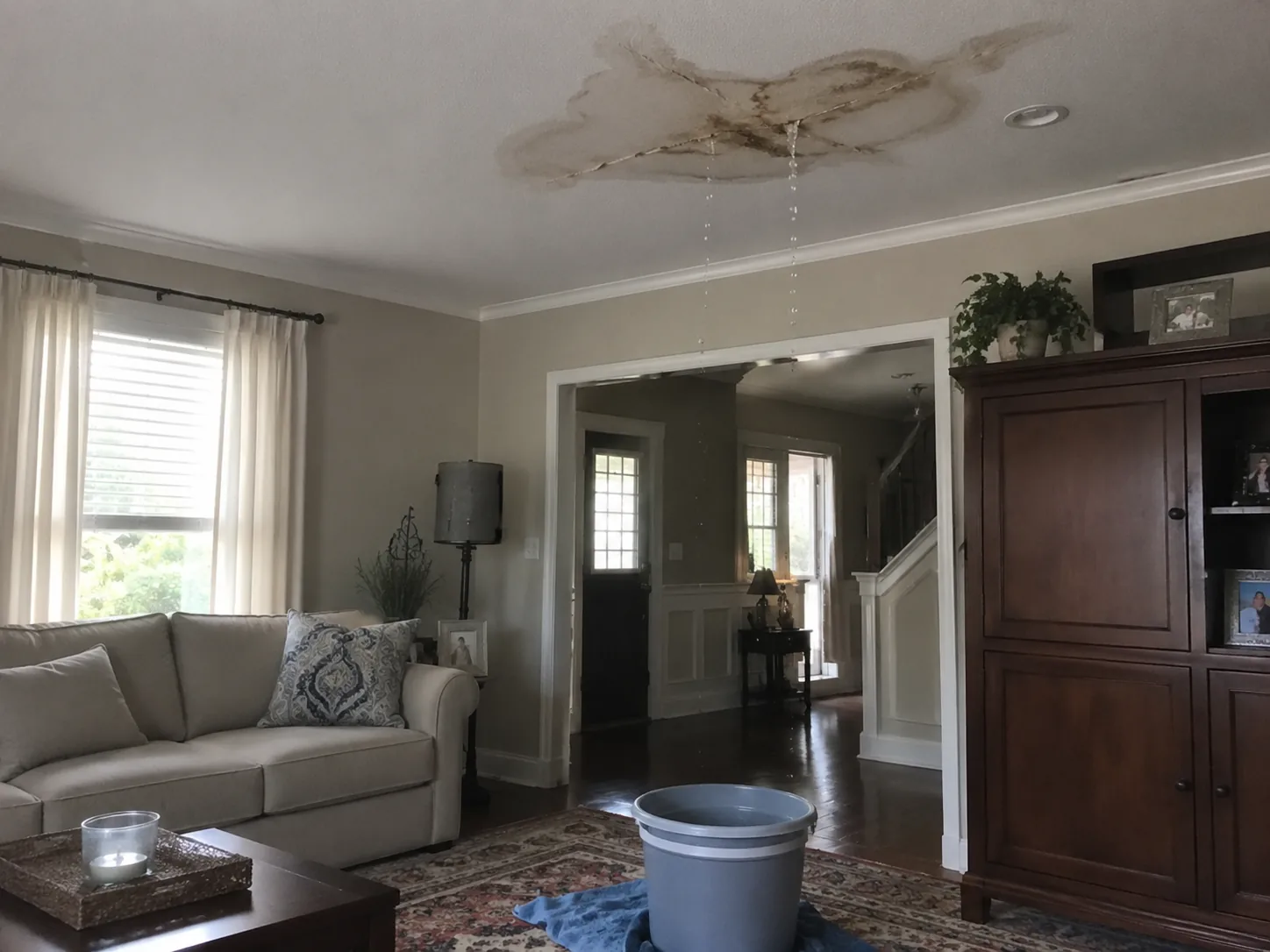
A ceiling leak should be treated as active water intrusion until the source is inspected. Protect the room first, then document the damage and schedule help.
Step 2: Avoid Electrical Hazards
Water and electricity do not belong together. If the leak is near a ceiling light, ceiling fan, recessed light, smoke detector, switch, outlet, or electrical panel, do not touch wet fixtures or switches. Keep people and pets away from the area.
If it is safe to do so from a dry location, you may need to shut off power to the affected area. If you are unsure, call a qualified professional. Roof repair can wait a few minutes. Electrical safety should not.
Step 3: Document Everything Before Cleanup
Take photos and video before the room is cleaned up. Capture the ceiling stain, active drip, surrounding drywall, nearby light fixtures, flooring, furniture, and any visible exterior storm conditions. Note the date, time, and what weather happened before the leak appeared.
This matters because roof leaks can be intermittent. A ceiling may drip during wind-driven rain from the west but stay dry during a straight-down shower. A leak may appear during snow melt but not during summer rain. Good notes help an inspector connect the interior symptom to the right roof area.
Step 4: Look for Clues, But Stay Off the Roof
You can gather useful information without climbing a ladder. From the ground, look for missing shingles, lifted shingles, branches on the roof, clogged gutters, overflowing downspouts, dented gutters, loose flashing, or debris around valleys. If you have a safe attic access point, you may be able to look for wet insulation, dark decking, daylight around penetrations, or water tracks, but do not step onto wet insulation or unsafe framing.
The safest inspection is still a professional roof and attic review. Wet roofs, steep rooflines, and storm damage are not worth a fall risk.
Common Ceiling Leak Sources in Noblesville Homes
A ceiling leak does not always start directly above the stain. Water can travel along rafters, insulation, pipes, framing, or drywall seams before it appears inside the room. These are the common sources Raptor checks when a Noblesville homeowner reports a ceiling leak:
- Pipe boots: Rubber collars around plumbing vents can crack and let water in during rain.
- Chimney flashing: Older homes and homes with masonry chimneys often leak where roof and chimney meet.
- Valleys: Water concentrates where roof slopes meet, especially during heavy rain or leaf buildup.
- Skylights: Aging seals, flashing details, and condensation can all show up as ceiling stains.
- Wind-lifted shingles: Storms can open a water path even if the roof looks normal from the driveway.
- Gutter overflow: Clogged gutters can push water under roof edges, behind fascia, or into soffit areas.
- Ice and snow melt: Winter leaks can show up when heat, snow, gutters, and roof edges interact poorly.
- Attic condensation: Poor ventilation or bathroom fans venting into the attic can create moisture that looks like a roof leak.
- Plumbing or HVAC: Leaks below bathrooms, mechanical spaces, or condensate lines may not be roof related.
How Urgent Is the Leak?
| What you see | What it may mean | Next step |
|---|---|---|
| Active dripping during rain | Open water path through roof, flashing, or another exterior detail | Protect the room and schedule a leak inspection quickly |
| Brown ceiling ring but no active drip | Past or intermittent leak that may return with the next storm | Document it and schedule inspection before it spreads |
| Bulging or sagging ceiling | Water may be collecting above drywall | Keep people away from the area and call for urgent help |
| Leak near light or ceiling fan | Water may be near electrical wiring or fixtures | Avoid the fixture and get professional help |
| Leak after snow or ice | Possible ice dam, gutter, insulation, or ventilation issue | Inspect roof edges, attic conditions, and drainage |
| Leak only during windy rain | Wind may be pushing water through flashing, siding, vents, or lifted shingles | Document storm direction and schedule a roof-system review |
Noblesville Details That Can Change the Leak Source
Morse Reservoir and open lots: Wind-driven rain can find weak flashing, roof edges, and lifted shingles faster than a calm rain.
Downtown and older Noblesville homes: Chimneys, older decking, roof layers, additions, and attic ventilation can complicate leak paths.
Tree-lined streets near Stony Creek and established neighborhoods: Leaves and debris can slow drainage in gutters and valleys, especially after a heavy storm.
Newer neighborhoods near Hazel Dell, Promise Road, and the Westfield/Fishers edges: Builder-grade ventilation, complex rooflines, and storm-facing slopes can be part of the leak conversation.
Should You Call Insurance?
If the leak appeared after a storm, hail, high wind, falling limb, or sudden event, documentation matters. Take photos, save weather notes, and have the roof inspected so you know whether there is visible storm damage. Raptor Roofing can document roof conditions and explain what we find, but your insurance carrier determines coverage.
If the leak is from normal wear, failed sealant, old flashing, a pipe boot, or maintenance-related drainage, a repair may be the more practical conversation. The inspection should separate those possibilities before you decide what to do next.
What Raptor Roofing Checks During a Noblesville Leak Inspection
A roof leak inspection should connect the interior symptom to the exterior source. Raptor checks the room where the leak appeared, the closest roof planes, attic clues when accessible, shingles, ridge cap, pipe boots, chimney flashing, skylights, valleys, gutters, wall intersections, roof edges, and storm damage indicators.
If the leak is active, the first recommendation may be temporary protection. If the leak is isolated, a repair may be enough. If the roof has widespread age, storm damage, poor ventilation, or multiple leak-prone details, replacement planning may make more sense.
Raptor Takeaway
A ceiling leak in Noblesville should be handled in two phases: protect the home immediately, then find the source before the next storm. The stain on the ceiling is only the symptom. The real answer is usually on the roof, in the attic, at a flashing detail, around drainage, or sometimes in plumbing or HVAC.
Do not ignore the leak because it stopped dripping. Water paths often stay hidden until the next round of rain, snow melt, or wind.
Schedule a Noblesville Ceiling Leak Inspection
Raptor Roofing helps Noblesville homeowners find roof leaks, document storm damage, repair leak-prone details, and plan roof replacement when the roof system is past the point of a small repair. We will give you a clear explanation of what we see and what the next step should be.
Schedule Your Noblesville Leak InspectionCall (317) 886-0696
Frequently Asked Questions About Ceiling Leaks in Noblesville
What should I do first if I find a ceiling leak in Noblesville?
Move belongings out of the way, place a bucket or towels under the drip, avoid wet electrical fixtures, take photos, and schedule a roof or water-intrusion inspection as soon as possible.
Does a ceiling leak always mean I need a new roof?
No. A ceiling leak can come from flashing, a pipe boot, a valley, a chimney, a skylight, gutters, attic condensation, plumbing, or HVAC equipment. A roof inspection should identify the source before replacement is discussed.
Should I poke a hole in a bulging ceiling?
Do not stand under a sagging or soft ceiling. If the ceiling is bulging, cracking, or holding a large amount of water, keep people out of the room and call for urgent help.
Can Raptor Roofing inspect a Noblesville roof leak?
Yes. Raptor Roofing can inspect shingles, flashing, pipe boots, valleys, gutters, attic clues, and interior leak patterns to help determine whether the issue needs repair, temporary protection, or replacement planning.
How fast should I schedule an inspection after a ceiling leak?
If water is actively dripping, schedule help immediately. If the ceiling is stained but dry, schedule an inspection soon, especially before the next heavy rain.