Commercial and specialty metal roofs
Commercial Metal Roofing in Indiana
Commercial metal roofing appears on Indiana businesses, churches, agricultural properties, warehouses, offices, and specialty buildings. The right plan depends on panel type, fasteners, seams, trim, slope, insulation, and leak history.
Commercial roof material
Commercial metal roofing covers more than one roof style.
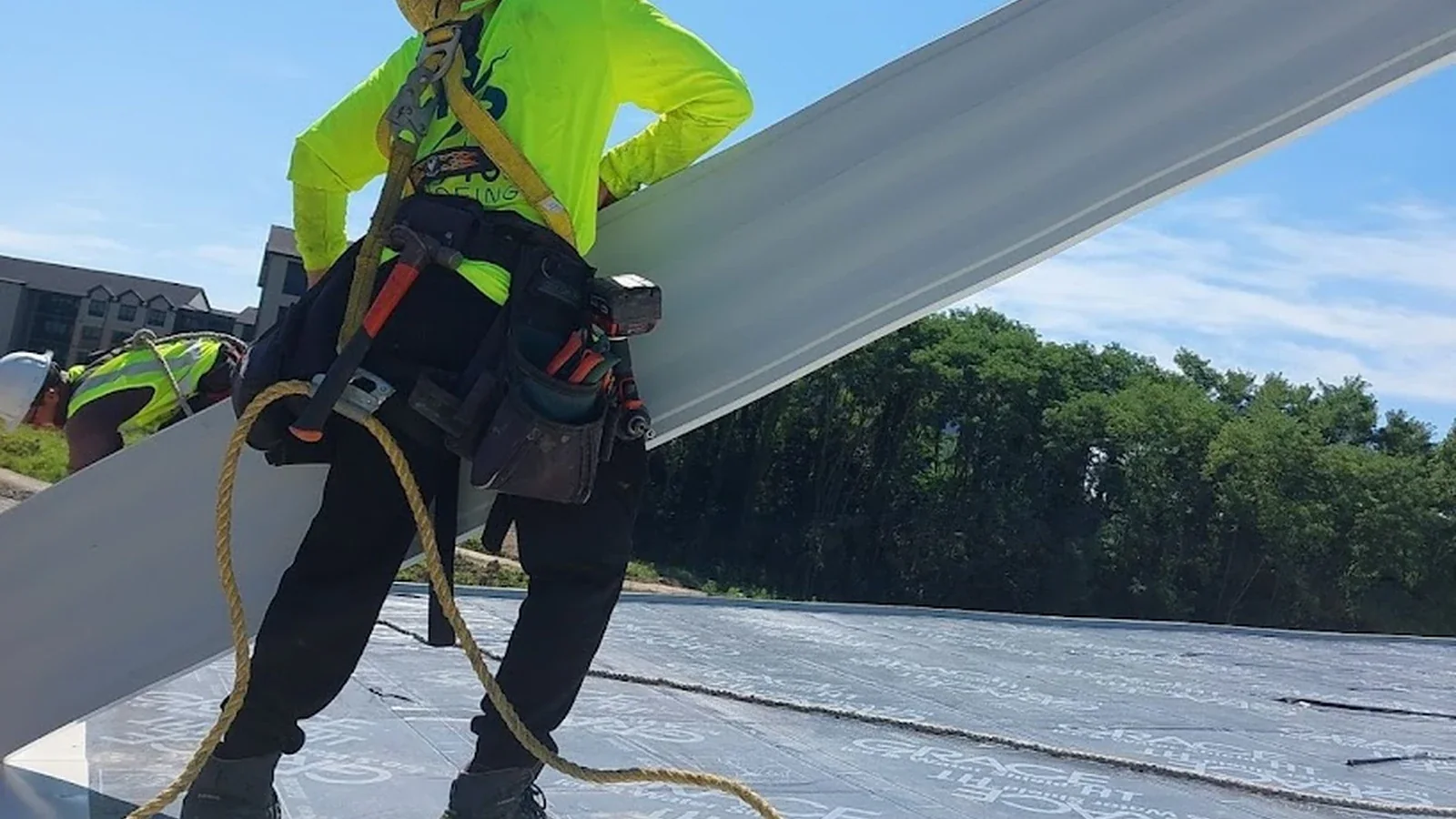
Some Indiana commercial metal roofs are standing seam systems. Others use exposed-fastener panels on shops, barns, warehouses, churches, or light industrial buildings. Each roof type has different maintenance and repair needs.
Metal roofing can perform for a long time, but it is not immune to leaks. Aging fasteners, failed washers, open seams, loose trim, damaged panels, rust, hail impact, and poorly flashed penetrations can all create water entry.
Commercial metal roofs also interact with insulation, condensation control, gutters, snow movement, skylights, rooftop equipment, and wall panels. Repairing a leak without understanding the system often means chasing the same problem after the next storm.
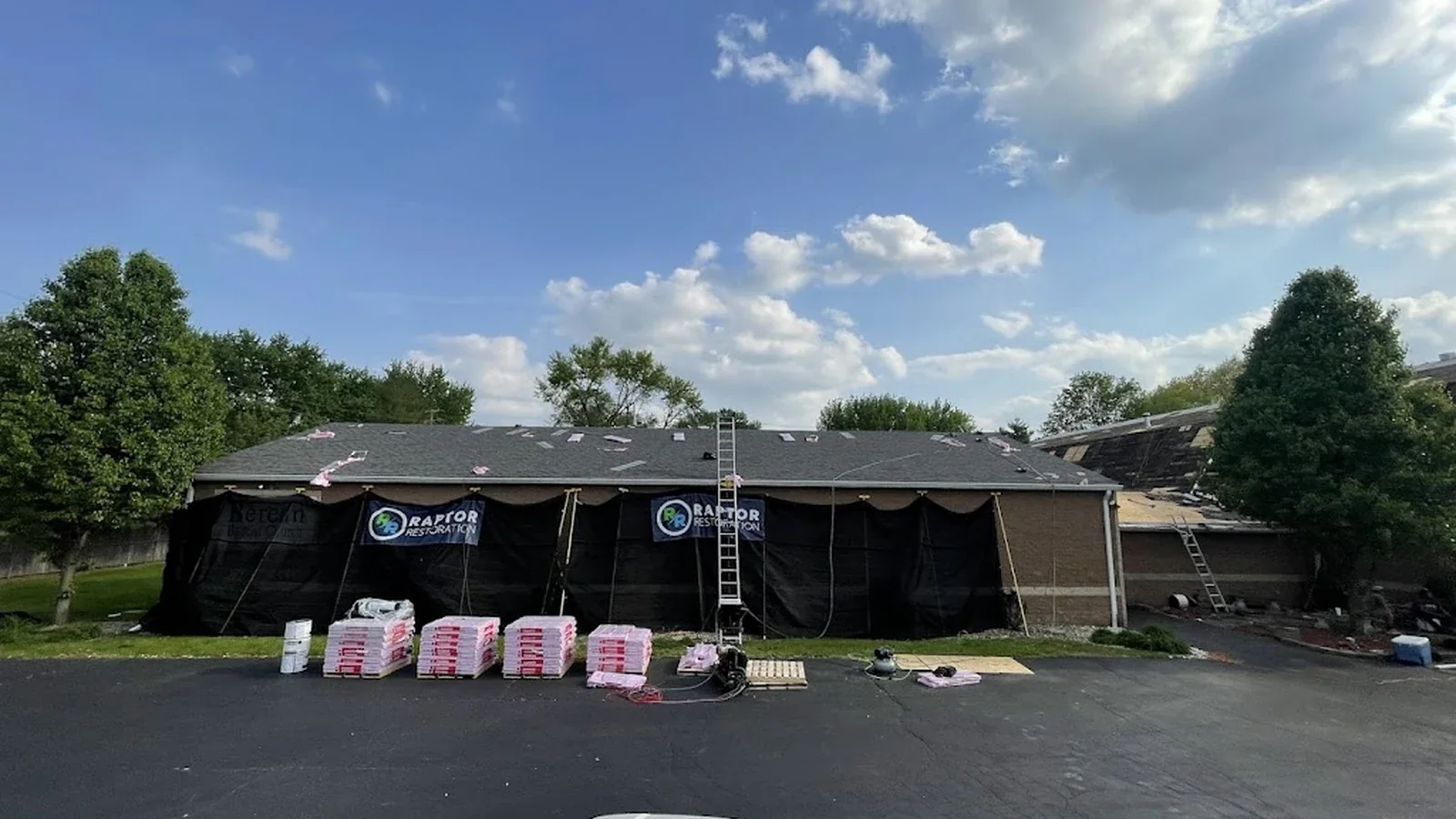
Raptor Roofing helps owners evaluate whether the right answer is targeted repair, fastener replacement, panel replacement, coating, retrofit, or a full roof replacement. The recommendation should fit the building, not just the material.
Panel type
Standing seam or exposed-fastener
The panel profile changes maintenance, leak risk, and repair approach.
Fasteners
Small parts create large leaks
Exposed fasteners and washers should be checked for age, backing out, and deterioration.
Trim
Edges and transitions matter
Ridge, rake, eave, wall, skylight, and penetration details often decide performance.
Condensation
Metal roofs need moisture planning
Insulation and ventilation can matter as much as exterior water control.
Local fit
Common commercial metal roof properties in Indiana.
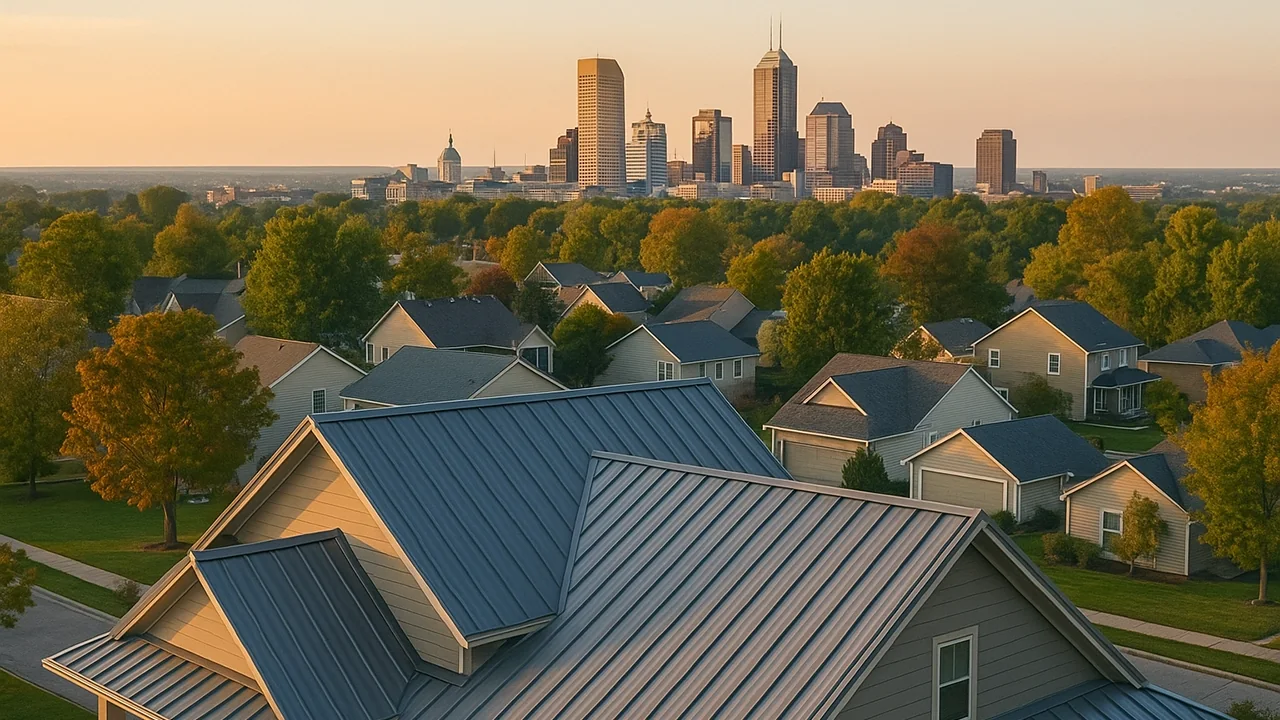
Commercial metal roofs are common on rural and suburban properties, especially where durability, slope, and large roof areas make panel systems practical.
- Agricultural and equestrian buildings
- Churches, shops, and light industrial spaces
- Warehouses and business properties with sloped roof sections
- Commercial buildings with metal accents, canopies, or mixed roof systems
Indiana planning lens
Material fit depends on more than the name of the roof.
Raptor looks at roof slope, drainage, storm exposure, attic or insulation conditions, access, budget timing, and how the roof connects to gutters, trim, walls, and rooftop equipment.
The result is a recommendation that separates what should be repaired now, what can be maintained, and what deserves a full replacement plan.
Compare the options
Commercial metal roof decisions.
A better roof consultation helps you compare the material, the assembly, and the practical details that affect performance in Indiana weather.
| Decision | Best fit | Why it matters |
|---|---|---|
| Repair | Localized fastener, seam, flashing, or panel issue | Best when the roof has useful life and the leak source is isolated. |
| Maintenance | Aging fasteners, sealants, debris, and gutter concerns | Reduces surprise leaks and tracks roof condition. |
| Coating | Compatible metal roof with sound panels and manageable rust | Can extend life when preparation and details are correct. |
| Replacement | Widespread corrosion, failing panels, poor design, or repeated leaks | Resets risk when repairs no longer make sense. |
Inspection priorities
Commercial metal roof warning signs.
Metal roof leaks often start small and travel along panels or insulation before showing inside the building.
Fasteners
- Backed-out screws
- Cracked or missing washers
- Rust stains around penetrations
Panels
- Loose laps or open seams
- Bent or storm-damaged panels
- Corrosion or coating failure
Water paths
- Overflowing gutters
- Poor snow movement planning
- Leaks near skylights or wall transitions
Raptor process
How Raptor turns a material question into a clear roof plan.
The material is important, but the decision gets easier when the inspection, photos, scope, and tradeoffs are organized clearly.
Inspect
We review panel type, fasteners, seams, trim, penetrations, gutters, rust, and interior leak reports.
Separate
The report separates repairable details from system-level replacement concerns.
Compare
Repair, maintenance, coating, retrofit, and replacement options are compared around risk and cost.
Schedule
Work is planned around access, safety, building operations, weather, and cleanup.
Material FAQs
Commercial metal roofing questions Indiana owners ask.
Can commercial metal roofs be repaired?
Yes. Fastener, seam, panel, flashing, and trim repairs may be possible when the roof is otherwise sound.
Why do metal roofs leak?
Common causes include aging fasteners, failed washers, open seams, rust, storm damage, and poor flashing around penetrations.
Can a commercial metal roof be coated?
Sometimes. The roof must be compatible, clean, sound, and properly prepared before coating is considered.
Is standing seam better than exposed-fastener metal?
Standing seam reduces exposed fasteners, but the best system depends on building type, slope, budget, and performance goals.
Do metal roofs need maintenance?
Yes. Edges, fasteners, gutters, sealants, penetrations, debris, and storm impacts should be checked periodically.
Can Raptor inspect mixed commercial roof systems?
Yes. Many commercial buildings combine metal sections with low-slope membrane roofs, and tie-ins should be documented.
Free roof inspection
Ready to compare commercial metal roofing for your Indiana property?
Tell Raptor what is going on with the roof. The team will inspect the property, document the roof condition, explain the material options, and help you choose the next step with confidence.