
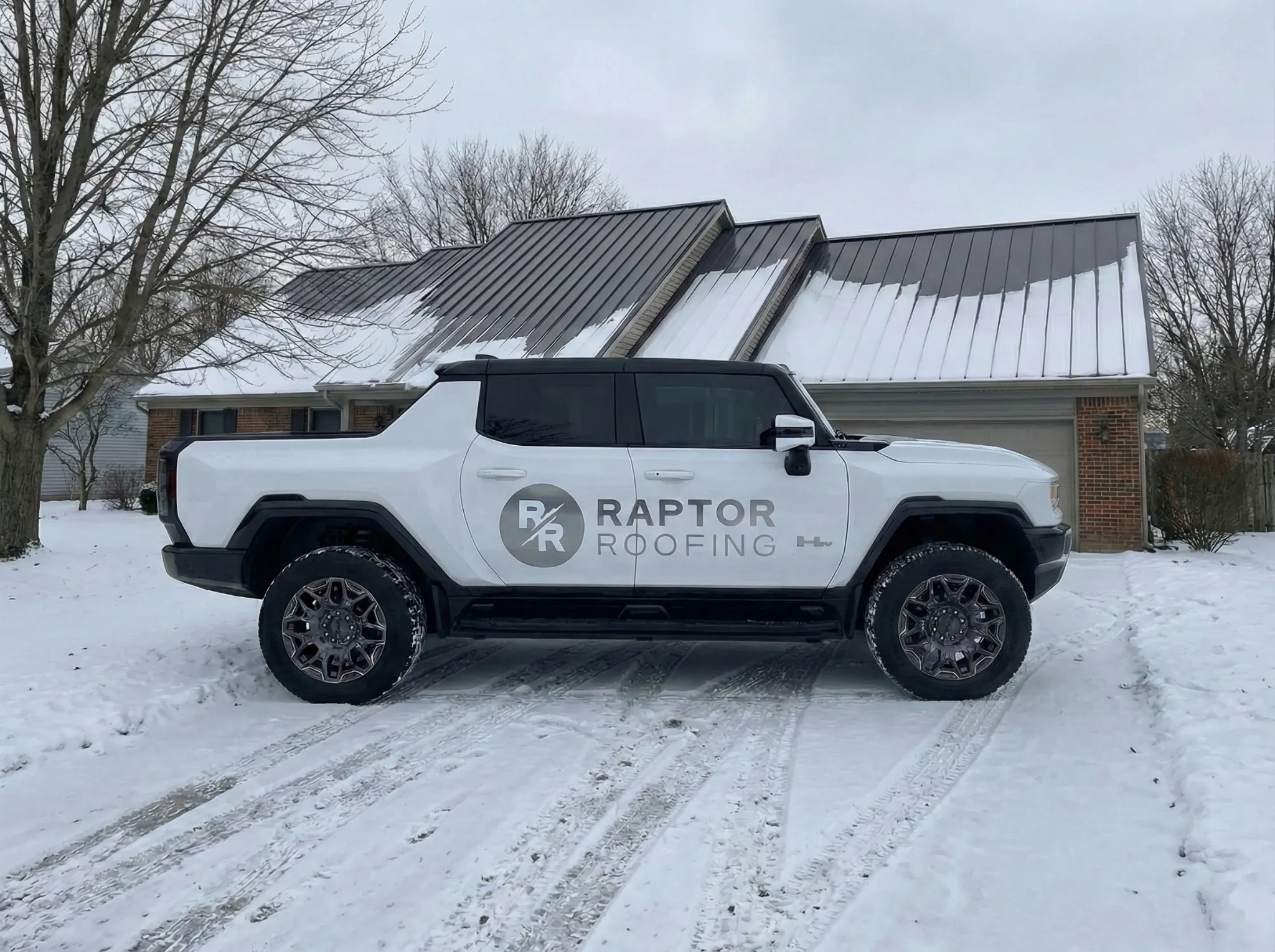
Local Expertise for Demanding Conditions
Greenwood and Johnson County sit at the heart of Central Indiana, where homes face humid summers, freezing winters, heavy rain, and occasional tornado-strength winds. Asphalt shingles deteriorate quickly under this constant stress, yet many homeowners assume that more durable roofing options will look industrial or cost too much.
Standing seam metal roofing from Raptor Roofing solves that problem by combining longevity, refined curb appeal, and weather-resistant engineering. Raptor Roofing is a locally owned residential and commercial roofing contractor based in Greenwood that specializes in metal roofing systems engineered for Indiana’s climate. Their team understands freeze-thaw cycles, snow loads, and wind uplift, and they fabricate panels on site for a precise, weather-tight fit.
Key Takeaways
- Service life varies with the exact product, installation, maintenance, roof design, and weather exposure. An inspection can assess visible condition but cannot promise how long the roof will last.
- Handles Indiana’s weather
Smooth vertical seams shed snow and ice, concealed clips allow the roof to expand and contract during freeze-thaw cycles, and panels are engineered to withstand winds up to 140 mph. - A reflective finish is one part of a roof assembly. Actual energy use also depends on insulation, ventilation, air leakage, heating and cooling equipment, and the building; savings should not be assumed.
- A project-specific written estimate is needed. Roof measurements, materials, removal, access, flashing, ventilation, and concealed damage can all affect the price.
- Ask how the proposed standing seam system fits your roof’s slope, penetrations, appearance, and maintenance needs. Confirm panel fabrication and installation details in the written proposal.
What Is Standing Seam Metal Roofing?
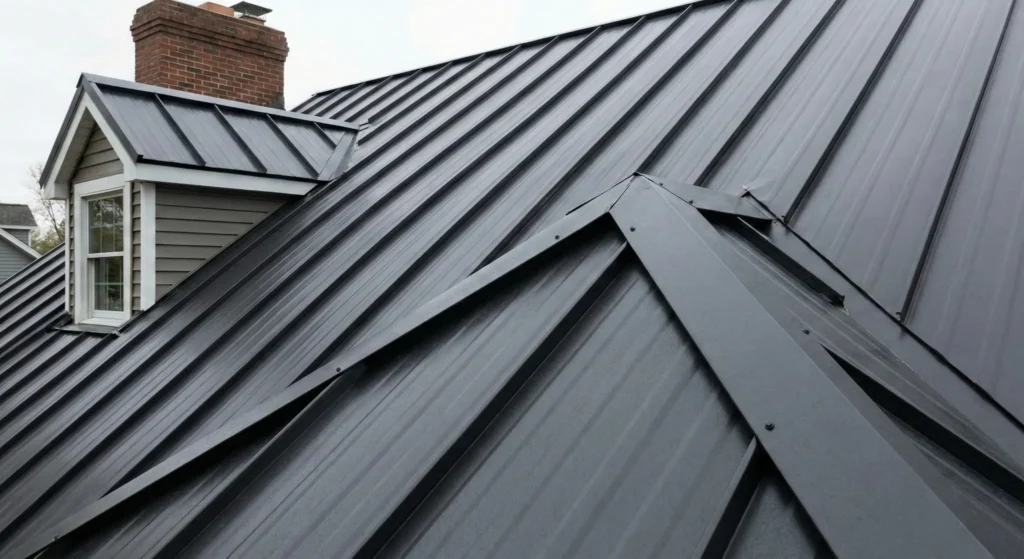
Standing seam metal roofing consists of long, interlocking panels with raised vertical seams that conceal the fasteners. Panels typically range from 12 to 20 inches wide and run continuously from ridge to eave.
Unlike exposed-fastener metal roofing, where screws penetrate the panel surface, standing seam systems use hidden clips or nail strips beneath the seams. These attachment methods secure the roof while allowing the panels to expand and contract naturally without loosening fasteners or compromising the weather seal.
Mechanical vs. Snap-Lock Seams
Mechanical Seams
Mechanical seams are crimped on site using specialized seaming tools. The panel edges are folded together to form a tight, watertight lock. These systems are ideal for low-slope roofs and areas with severe weather. While they require more labor and equipment, they offer maximum strength and weather resistance.
Snap-Lock Seams
Snap-lock panels are factory-formed so the male leg snaps into the female leg of the adjacent panel. Installation is faster because no mechanical seamer is required. Snap-lock systems perform well on roof slopes of 3:12 or steeper and are a cost-effective choice for most residential applications.
Raptor Roofing installs both systems and recommends the appropriate seam type based on roof pitch, design requirements, and budget.
Concealed Fasteners and Panel Profiles
Concealed fasteners play a major role in standing seam performance. By hiding screws beneath the seams, the roof is protected from water intrusion, corrosion, and fastener fatigue. Clip-attached panels allow slight movement during temperature changes, reducing stress on the metal and minimizing oil canning.
Common panel profiles include:
- Nail-strip panels, where fasteners are hidden beneath the next panel
- Clip-fastened panels, which allow controlled thermal movement
- Flat pan or trapezoidal profiles, chosen for strength, aesthetics, and snow-shedding performance
Why Standing Seam Is Ideal for Greenwood, Indiana Homes
Freeze-Thaw Protection
Indiana winters often involve daytime melting followed by overnight refreezing. This cycle loosens shingles and exposed fasteners over time. Standing seam roofs use concealed clips that allow movement without stressing seams, reducing leaks and fastener failure.
Snow Load and Ice Dam Prevention
Metal roofing sheds snow efficiently, preventing heavy accumulation. Snow guards can be installed to control sliding snow and protect walkways. Proper attachment, hemmed edges, and clip placement help resist snow loads and wind uplift.
Wind Resistance
Standing seam metal roofs are engineered to withstand sustained winds of 140 mph or more, far exceeding the design limits of most asphalt shingle systems. Interlocking panels and concealed fasteners provide superior uplift resistance.
Longevity vs. Asphalt Shingles
Compare the proposed metal system with the shingle alternative on installation scope, maintenance, appearance, repair access, and written terms. Neither material label establishes service life.
Energy Efficiency in Indiana Summers
A reflective finish is one part of a roof assembly. Actual energy use also depends on insulation, ventilation, air leakage, heating and cooling equipment, and the building; savings should not be assumed.
Standing Seam vs. Other Roofing Options
| Roof Type | Typical Lifespan | Maintenance | Cost Over Time | Visual Appeal & ROI |
|---|---|---|---|---|
| Standing seam metal | Product- and condition-dependent | Occasional inspection; concealed fasteners reduce leaks | Compare the complete installed scope | Clean rooflines; resale response varies |
| Asphalt shingles | Product- and condition-dependent | Frequent repairs and replacements | Compare installation and maintenance scope | Traditional look, limited durability |
| Exposed-fastener metal | Product- and condition-dependent | Screws require ongoing maintenance | Lower material cost, higher maintenance | Utilitarian appearance |
| Stone-coated steel | Product- and condition-dependent | Minimal maintenance | High material and labor cost | Mimics tile or shake, premium appearance |
Standing seam roofing offers the best balance of durability, appearance, and long-term value for most Greenwood homeowners.
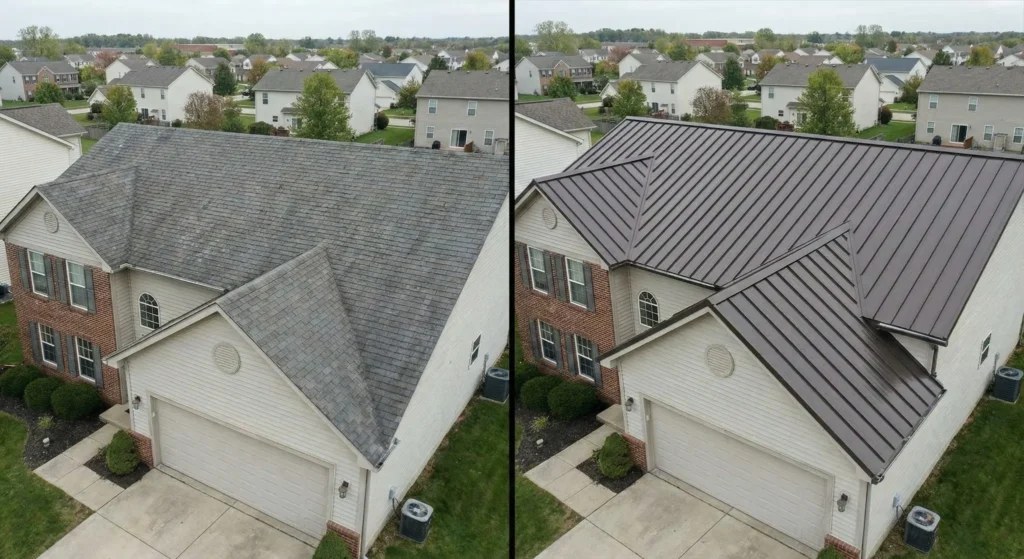
Standing Seam Metal Roof Cost in Greenwood, IN
Costs vary based on panel type, metal thickness, roof complexity, and installation method.
- Roof size and access: confirm measured quantities and staging needs.
- Snap-lock panels: confirm product suitability, roof slope, and installation details.
- Mechanically seamed panels: confirm seam specification, equipment, and labor scope.
Final pricing depends on roof pitch, metal gauge, tear-off requirements, flashing details, snow guards, and underlayment upgrades.
Compare ownership considerations
Installation price is one part of the decision. Consider maintenance, repair access, appearance, and the work needed beneath the panels. Energy savings, resale gains, and lower lifetime cost should not be assumed.
Installation Process: What to Expect
Raptor Roofing follows a precise, proven installation process:
- Roof inspection and preparation
- Deck repairs, insulation, and ventilation adjustments
- Drip edge and underlayment installation
- Gable edge flashing
- Accurate layout and first-panel alignment
- Panel installation with concealed clips or nail strips
- Seam locking (snap-lock or mechanical)
- Ridge cap, flashings, and accessories
- Final inspection, cleanup, and homeowner walkthrough
Request the product and workmanship warranty documents that apply to the specific proposal. Review the provider, term, exclusions, maintenance requirements, and claim process before approving the work.
Common Metal Roofing Myths: Debunked
- “Metal roofs are noisy.” Proper decking and underlayment make them no louder than shingles.
- “Metal attracts lightning.” Metal does not increase strike risk and safely disperses energy.
- “Metal roofs rust.” Modern coatings and substrates resist corrosion for decades.
- “Metal makes homes hotter.” Reflective finishes reduce heat gain, lowering cooling costs.
- “HOAs don’t allow metal roofs.” Many Greenwood HOAs now approve standing seam designs with subtle profiles and colors.
Residential vs. Commercial Standing Seam Roofing
Residential Applications
Most homes use snap-lock or nail-strip panels in lighter gauges. These systems are cost-effective, attractive, and ideal for steeper roof pitches.
Commercial Applications
Low-slope commercial buildings require heavier gauges and mechanically seamed panels for maximum strength and water resistance. Raptor Roofing designs systems to meet structural and code requirements for these projects.
Why Homeowners Choose Raptor Roofing
- Local authority with deep Greenwood and Johnson County experience
- Specialists in metal roofing, not generalists
- On-site panel fabrication for fewer seams and better fit
- Written product and installation terms
- Clear communication and clean job sites
- Comprehensive services, including gutters, snow guards, and ventilation
Signs It’s Time to Upgrade to Standing Seam
- Repeated asphalt repairs after storms
- Ice dams or persistent leaks
- High energy bills due to attic heat gain or loss
- Plans to stay in the home long-term
- Preference for a different roof appearance
Frequently Asked Questions
How long does a standing seam metal roof last? Service life varies with the exact product, installation, maintenance, roof design, and weather exposure. An inspection can assess visible condition but cannot promise how long the roof will last.
Is standing seam worth the cost in Indiana? Compare the full installation scope, maintenance, repair access, appearance, and your plans for the home. Lower lifetime cost should not be assumed.
Does a metal roof increase home value? Buyer preferences and market conditions vary. Select a roof for the property’s needs rather than a promised resale return.
Can it be installed over existing shingles?
Sometimes, depending on deck condition and local codes.
Is it loud during rain?
No. Proper installation makes it comparable to asphalt shingles.
What maintenance is required?
Periodic inspections, debris removal, and gutter maintenance.
Ready to Upgrade? Contact Raptor Roofing
Raptor Roofing provides free standing seam roof evaluations for homeowners in Greenwood, Johnson County, and Central Indiana. Their team offers clear guidance, transparent pricing, and expertly installed metal roofing systems built for Indiana’s climate.
A standing seam roof is a long-term investment; partner with local specialists who know how to do it right.
Compare standing seam on your Greenwood home
See where the concealed-fastener premium comes from and which scope details should appear in the quote.