
Know the condition.
Understand the roof before choosing the work.
See your options.
Compare repairs, materials, and the complete scope.
Move forward clearly.
Know what happens next, from scheduling to cleanup.
Your roof, considered carefully
The clean lines are only the beginning.
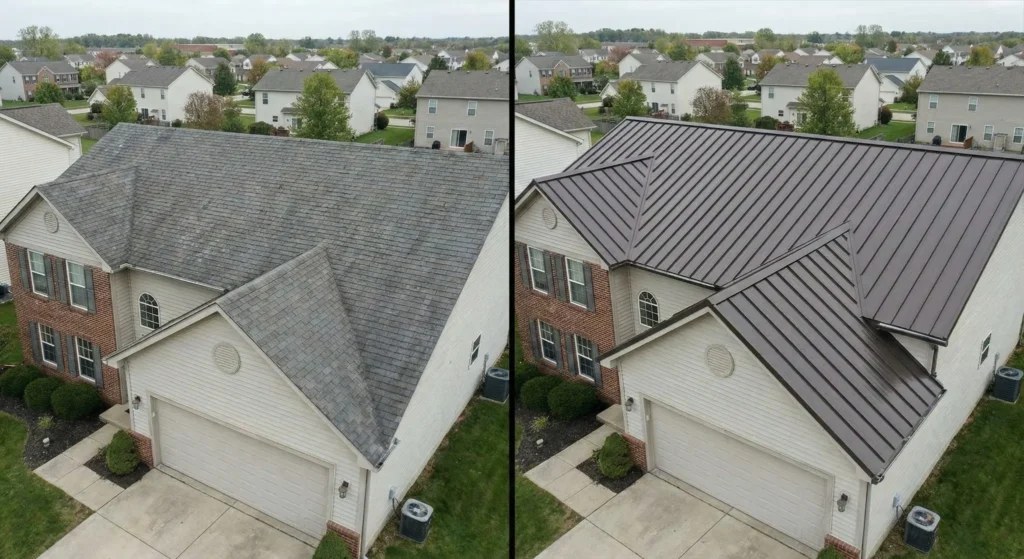
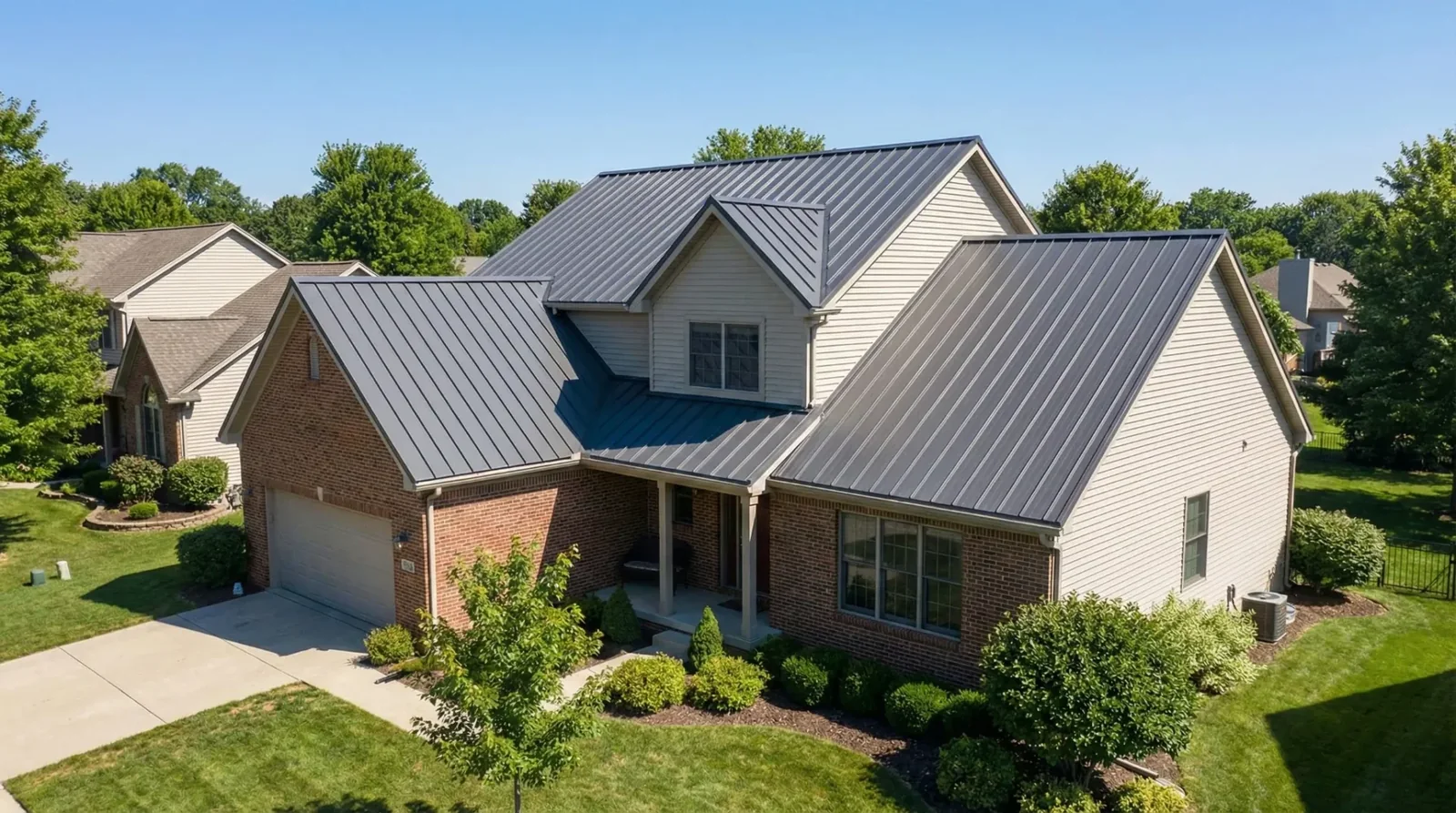
A standing seam roof can transform a modern farmhouse, a wooded custom home, a lake property, or a long-term family home. It also makes mistakes more visible, which is why the consultation needs to slow down around details.
Indiana homes see hard rain, summer heat, freeze-thaw movement, occasional heavy snow, and wind-driven storms. Metal handles movement differently than asphalt, so the roof plan should include expansion, contraction, panel length, fastening method, valleys, and the way water and snow leave the roof.
Standing seam often costs more upfront than asphalt, but the value case is not only life span. Homeowners also choose it for clean lines, lower maintenance expectations, strong curb appeal, and the confidence of a concealed-fastener roof system.
Find your fit
Standing seam decisions that should be explained before you sign.
Panel layout
Straight runs, valleys, hips, dormers, and roof interruptions
Layout affects appearance, waste, labor, and water management.
Trim package
Ridge, rake, eave, sidewall, headwall, and valley details
Trim is where many metal roofs either look finished or look forced.
Underlayment
High-temp protection and moisture control
A long-life roof deserves a deck and underlayment plan that matches the system.
Snow movement
Gutters, doors, walks, landscape beds, and snow guards
Metal sheds snow differently and should be planned around real daily use.
Clean lines. Care in every layer.

Repair, restore, or replace
The right next step starts with the roof you have.
A material name alone cannot tell you whether a roof needs replacing. We connect visible damage, moisture, and the history of the roof before recommending the work.
When a targeted approach may fit
An isolated flashing, trim, or penetration problem may be repairable when the panels, clips, and surrounding assembly are still sound.
When a larger plan may fit
Widespread panel damage, failing seams, trapped moisture, or recurring installation problems call for a closer look at replacement.
We also check: Concealed clips and seam type; Panel gauge and coating expectations; How expansion and contraction are handled; Chimney and skylight flashing; Roof-to-wall details; Valleys and penetrations.
Compare the full scope
What belongs in your roofing estimate.
A clear proposal helps you see what is included, what may change after tear-off, and how the finished roof will be protected.
01
Panel manufacturer, profile, metal thickness, and finish
02
Clip and fastening approach for roof movement
03
Decking, underlayment, valleys, and penetration details
04
Tear-off, access, snow management, and separate warranty coverage
The Raptor process
Clear from the first look to the final review.
01
Evaluate
We inspect the roof shape, decking, ventilation, penetrations, gutters, and whether standing seam is the right fit.
02
Design
You compare color, panel direction, trim, snow management, and any asphalt or specialty alternatives.
03
Prepare
The scope covers tear-off, underlayment, flashing, trim, staging, cleanup, and protection.
04
Finish
Installation is reviewed for clean lines, tight transitions, and a finished look that suits the home.
Helpful answers
Good questions. Straight answers.
Is standing seam the same as exposed-fastener metal roofing?
No. Standing seam systems conceal their primary fasteners beneath raised seams or panel joints. Exposed-fastener panels have visible fasteners through the panel surface. The two approaches have different appearance, installation, movement, and maintenance considerations.
Is standing seam metal roofing worth it in Indiana?
It can be worth it for long-term homeowners who value durability, clean design, and lower maintenance. The roof shape and budget still matter.
Are metal roofs noisy during Indiana rainstorms?
Over solid decking, underlayment, and attic insulation, a residential metal roof is usually not dramatically louder inside the home.
Can standing seam help with snow?
Metal sheds snow more readily than asphalt, which can be helpful but needs planning around gutters, doors, walks, and landscaping.
Can standing seam be used as an accent only?
Yes. Metal accents over porches, bays, and dormers can add a premium look without replacing the entire roof with metal.
What makes standing seam pricing higher?
Panel type, roof geometry, trim, underlayment, tear-off, decking repairs, penetrations, color, and labor detail all influence cost.
Can Raptor compare standing seam with stone coated steel?
Yes. Standing seam gives a cleaner modern look, while stone coated steel can offer a more dimensional shingle or shake appearance.
Keep exploring
Compare the options for your property.
A simpler way forward
Let’s make the next step clear.
Tell us about the property and what brought you here. We’ll follow up to discuss your roof and arrange a free inspection.
Serving Indianapolis, Greenwood, Carmel, Fishers, Noblesville, and nearby Central Indiana communities.
Prefer to talk? Call (317) 886-0696.
Planning a full replacement? Explore available financing options.