
Know the condition.
Understand the roof before choosing the work.
See your options.
Compare repairs, materials, and the complete scope.
Move forward clearly.
Know what happens next, from scheduling to cleanup.
Your roof, considered carefully
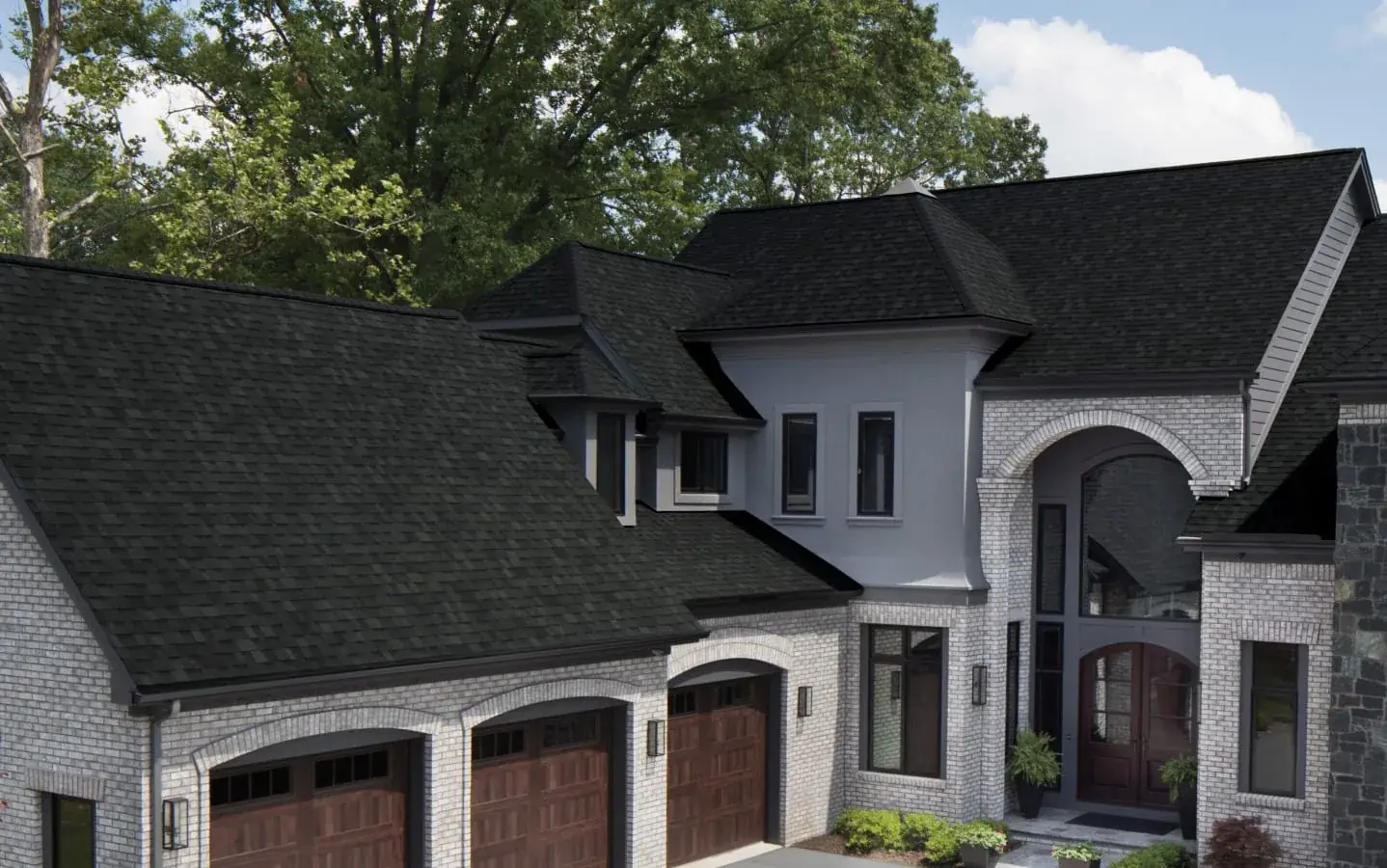
A familiar look. A carefully built roof.
From Greenwood ranch homes to Carmel two-stories, Fishers subdivisions, Franklin farmhouses, and older Indianapolis neighborhoods, asphalt shingles remain the most common steep-slope roofing choice because they fit a wide range of homes and budgets.
Indiana weather gives asphalt shingles a real test. Spring hail can bruise the mat, wind can lift tabs, summer heat can accelerate granule loss, and winter freeze-thaw cycles can expose weak flashing or attic ventilation problems. A good replacement plan should account for all of those conditions before the first bundle is opened.
The biggest mistake is treating asphalt shingles as a single product. Architectural shingles, impact-focused shingles, designer profiles, color blends, ridge systems, ice and water protection, and attic ventilation can change how the roof looks and how it performs. The best estimate explains those differences in plain English.
Find your fit
Asphalt shingle decisions that shape the finished roof.
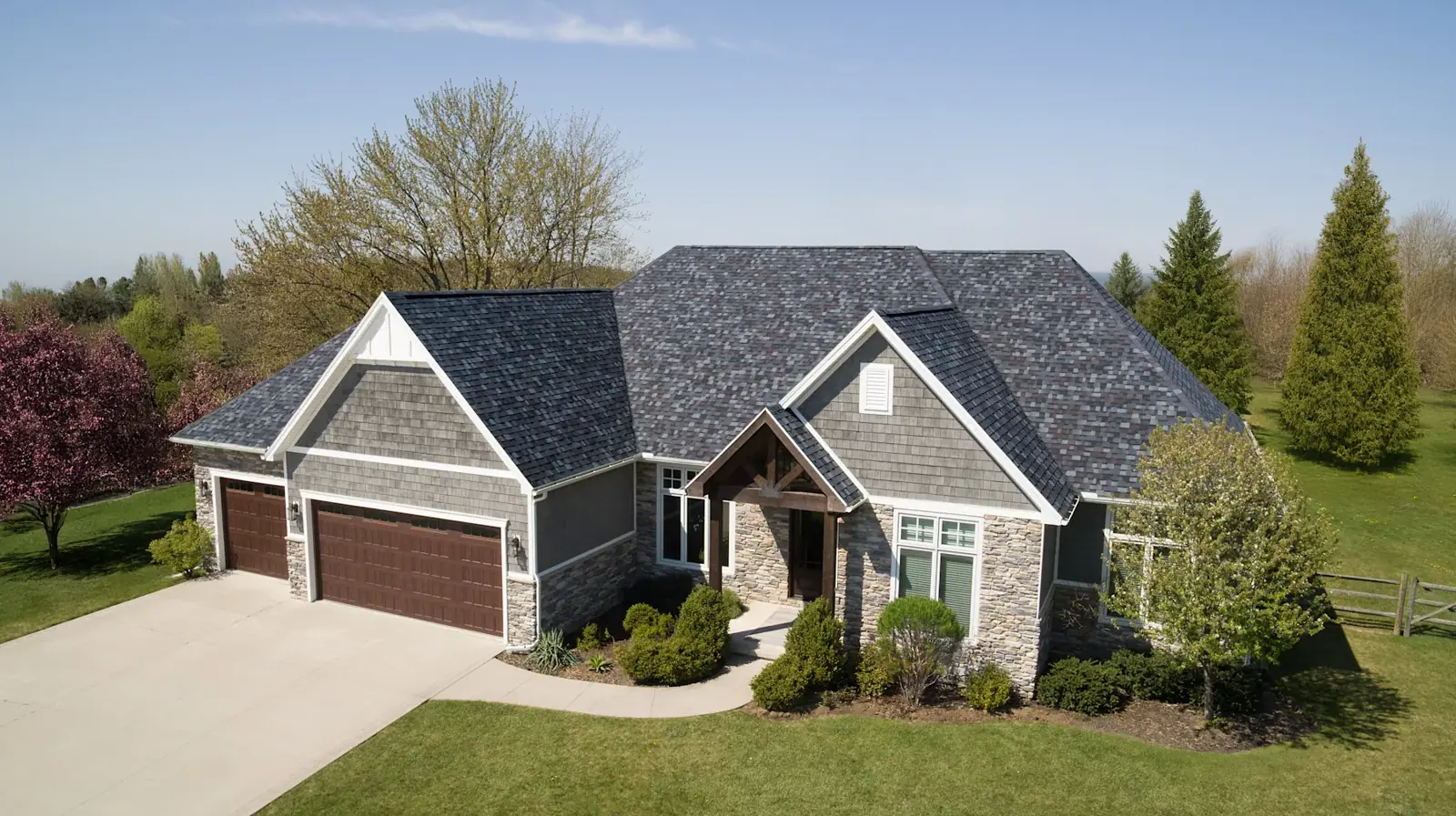
Architectural shingles
Most full replacements on Indiana homes
Dimensional appearance, broad availability, and practical value.
Impact-aware options
Homes with repeated hail exposure or insurance concerns
May improve resilience, but roof condition and policy details still matter.
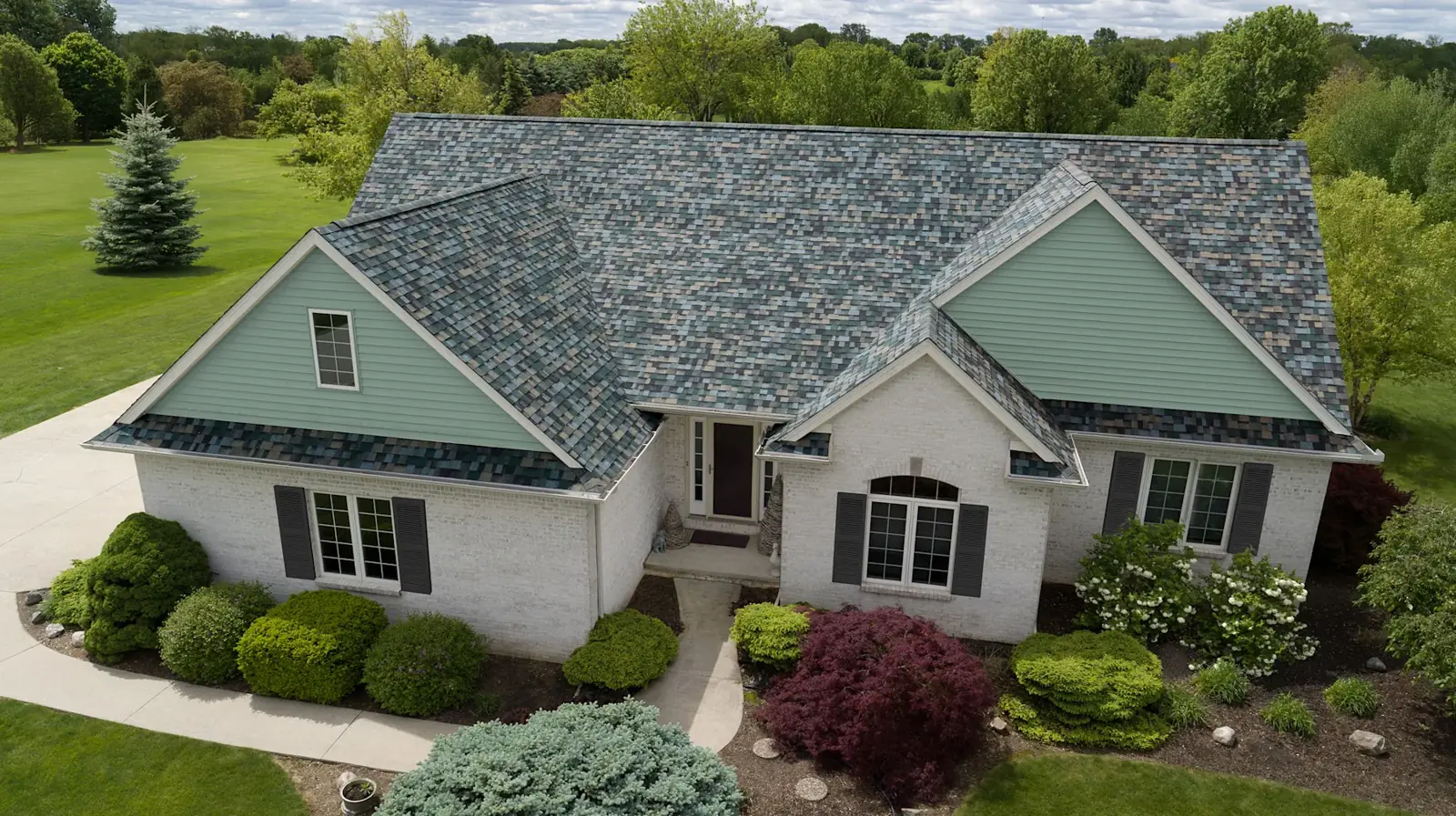
Designer profiles
Homes where the roof is a major curb-appeal feature
Adds visual depth when the budget and architecture support it.
Ventilation upgrades
Hot attics, ice-dam history, or premature aging
Helps the shingle system and attic assembly work together.
Find the right color for your home.
Repair, restore, or replace
The right next step starts with the roof you have.
A material name alone cannot tell you whether a roof needs replacing. We connect visible damage, moisture, and the history of the roof before recommending the work.
When a targeted approach may fit
Missing shingles, a failed pipe boot, or a small flashing leak may be repairable when the surrounding shingles are flexible and the roof has useful life left.
When a larger plan may fit
Widespread wear, brittle shingles, recurring leaks, or extensive storm damage can make a complete replacement the more dependable investment.
We also check: Soft or uneven sheathing; Old layers that should be removed; Nail-hold concerns or visible waves; Ice-prone eaves and valleys; Wind-exposed slopes; Tree debris and shaded roof sections.
Compare the full scope
What belongs in your roofing estimate.
A clear proposal helps you see what is included, what may change after tear-off, and how the finished roof will be protected.
01
Exact shingle line, color, starter, and ridge cap
02
Tear-off, decking allowances, and change-order pricing
03
Underlayment, flashing, pipe boots, and attic ventilation
04
Property protection, cleanup, and written warranty terms

The Raptor process
Clear from the first look to the final review.
01
Inspect
We review roof age, storm wear, attic ventilation, decking, flashing, roof penetrations, and drainage.
02
Compare
You see practical shingle options, color direction, warranty considerations, and any ventilation or decking needs.
03
Scope
The proposal separates material, tear-off, flashing, underlayment, cleanup, and optional upgrades so the decision is clear.
04
Install
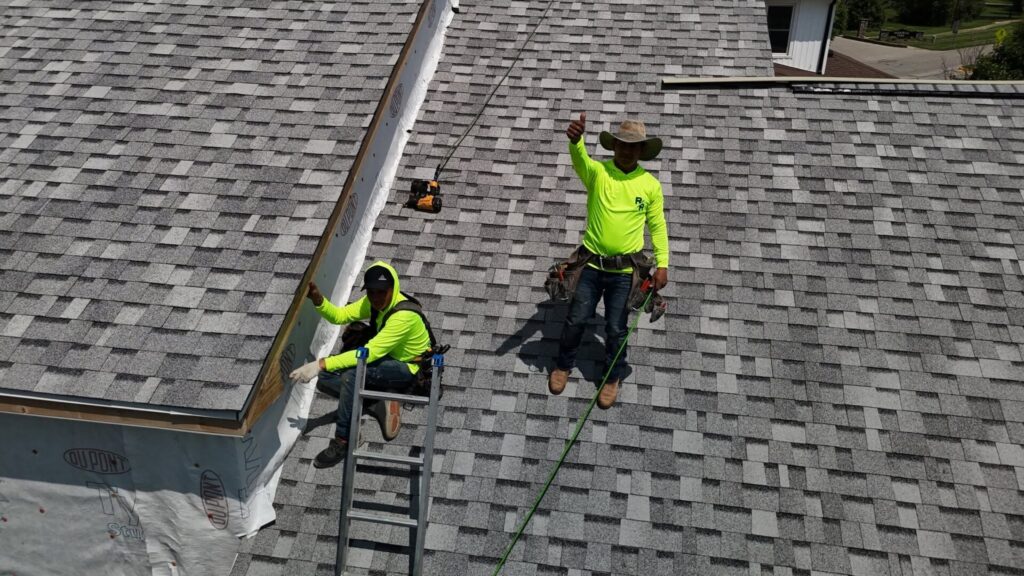
The installation focuses on clean tear-off, correct details, property protection, magnet cleanup, and final review.
Helpful answers
Good questions. Straight answers.
How much does an asphalt shingle roof replacement cost?
The price depends on roof size, slope, access, layers to remove, shingle selection, decking repairs, flashing, and ventilation. A written inspection-based estimate lets you compare the complete project instead of a generic price per square foot.
Are asphalt shingles good for Indiana homes?
Yes. Asphalt shingles are a practical fit for many Indiana homes because they balance cost, appearance, repairability, and weather performance when installed as a complete roof system.
How long do asphalt shingle roofs last in Indiana?
Life span depends on shingle type, ventilation, installation, roof exposure, storm damage, and maintenance. Heat, hail, wind, and freeze-thaw cycles can shorten the expected life if problems are ignored.
Should I choose architectural shingles or designer shingles?
Architectural shingles fit most replacement projects. Designer shingles may make sense when the home has a premium exterior, steep rooflines, or a curb-appeal goal that supports the added cost.
Can hail damage asphalt shingles without causing leaks right away?
Yes. Hail can bruise shingles, loosen granules, or weaken the mat before water intrusion is obvious. Documentation after a storm matters.
Does attic ventilation affect asphalt shingles?
Yes. Poor ventilation can trap heat and moisture, which may contribute to premature aging, comfort issues, and winter ice problems.
Can Raptor help compare asphalt with metal roofing?
Yes. Raptor can compare asphalt, standing seam, stone coated steel, repair, and replacement options based on the home and budget.
Keep exploring
Compare the options for your property.
A simpler way forward
Let’s make the next step clear.
Tell us about the property and what brought you here. We’ll follow up to discuss your roof and arrange a free inspection.
Serving Indianapolis, Greenwood, Carmel, Fishers, Noblesville, and nearby Central Indiana communities.
Prefer to talk? Call (317) 886-0696.
Planning a full replacement? Explore available financing options.